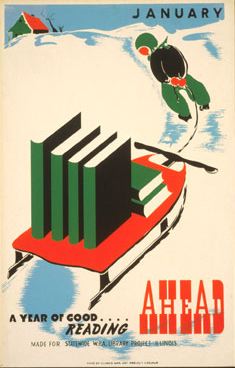
January 13, 2007

More thoughts on The Barefoot Book of Classic Poems and classic poetry

Ah, but a man's reach should exceed his grasp,
Or what's a heaven for?
Or what's a poem for?
-- from Stephen Fry's nifty Ode Less Traveled: Unlocking the Poet Within (original quote from Robert Browning)

On the heels of my guest review at Chicken Spaghetti of The Barefoot Book of Classic Poems, I'm still agitating and cogitating about the book, a wonderful and luminous volume I thought -- heck, my kids thought -- was one of the best children's poetry books of 2006 and yet failed to make it into the top five of the Cybils poetry titles. Go figure. I'm still trying.

In fact, for some time now I've been trying to figure out the current politics of poetry for children, which nowadays means that most folks aren't interested, or think that children won't be interested, in poems that aren't "relevant", "accessible", or scatalogical. Admittedly, to many children and parents, the idea of poetry, especially the classic variety, is about as welcome as the thought of a plate full of broccoli (unless, of course, you figure that both are just an acquired taste, and the thing to do with your kids is to start acquiring those tastes while having fun, which isn't particularly sneaky, mean, or difficult). And the fact that some of the poems and poets in The Barefoot Book aren't usually found in children's books, or that some of the authors could be considered "dead white males" will no doubt cause some parents, especially those who tend to underestimate the little dears and their abilities, to gnash their teeth and grumble.

But as I learned a few years ago during Laura's brief foray into public education, just before we started home schooling, it's a mistake and a terrible disservice to children to underestimate them, or to foist on them one's own prejudices, against either Auden or eggs. I've long taken inspiration from the educational philosophy of Marva Collins, who believes that children are naturally ambitious and rise to a challenge; and I've been heartened recently to read both author Mitali Perkins's fond remembrance of Wordsworth and my friend JoVE's post on Accessible Poetry, about modern children and classic works. The vocabulary and exact meaning of some lines may not always be obvious to children, and yet the rhythm and poetry still speak to them. When children are older, they'll already be familiar with some of the great writers and great books, greeting the original works as old friends rather than viewing them with fear or displeasure. And as adults, they'll be able to join in the Great Conversation, as educational philosophers Robert Maynard Hutchins and Mortimer Adler called it, rather than just joining in the latest gossip. In a 1970 interview, Hutchins said,
[I]t seemed to me that the Great Books were the most promising avenue to liberal education if only because they are teacher-proof. If there were a Socrates behind every teacher's desk, you would not need to worry about the curriculum. ... I am sorry to repeat that the striking thing about young people today is that they are frightfully ignorant of the past. I don't see how this can ever be an advantage. I understand the advantages of innocence but I do not understand the advantages of ignorance. ... They are ignorant of the fact that there is a Great Conversation echoing back through history on the subject of justice. You are quite right that they are not ignorant in the sense that they do not lack information. They have more information than any previous generation, but having a great deal of information has little to do with knowledge. Knowledge is organized information, and an institution pursuing knowledge is not simply trying to hand out the latest dope on everything; it is trying to put this current information into a context of ideas that can be useful for analyzing the problems of daily life.
While some of my Cybils colleagues had concerns that the poetry in the book is too "old" to be suitable for kids, I tend to consider poems ageless, as I wrote in a post to the group. I don't really think of Edward Lear and Lewis Carroll as children's poets (I remember a surprising and glorious English class in 11th grade studying Alice) or "A Child's Garden of Verses" as children's poetry -- the latter, in fact, seems to speak to me more now that I have children of my own -- any more than I think of Yeats and Emerson as poets for adults. So I was happy to reread recently Harold Bloom's introduction to his Stories and Poems for Extremely Intelligent Children of Ages:
...I do not accept the category of "Children's Literature," which had some use and distinction a century ago, but now all too often is a mask for the dumbing-down that is destroying our literary culture. Most of what is commercially offered as children's literature would be inadequate fare for any reader of any age at any time. I myself first read nearly everything I have gathered together in this book between the ages of five and fifteen, and I have gone on reading these stories and poems from fifteen to seventy. My title is meant to be precise: What is between these covers is for extremely intelligent children of all ages. Rudyard Kipling, Lewis Carroll, and Edward Lear are blended with Nathaniel Hawthorne, Nicolai Gogol, and Ivan Turgenev, because all of them -- in the poems and stories I have chosen -- make themselves open to authentic readers of any age. There is nothing here that is difficult or obscure, nothing that will not both illuminate and entertain. If anyone finds a work here that does not yield immediately to their understanding, I would urge them to persevere. It is by extending oneself, by exercising some capacity previously unused that you come to a better knowledge of your own potential [emphasis mine].
As I wrote in our panel discussions, and I have a feeling my impassioned pleas for The Barefoot Book went well beyond mere discussion (though my fellow panelists are a forgiving bunch), I'm not quite sure when "classic" became a pejorative term or started to mean only heavy, serious, somber works. I've always understood the word to mean something -- whether art, music, movies, or literature -- that has stood the test of time and avoided the faddish, and informed an understanding of the human condition, and children are very, very human. The Barefoot Book of Classic Poems is genuinely a book to grow with, with a wide range of poetry and a variety of voices to appeal to children of all ages, abilities and interests, the sort of book a son or daughter might take along when it's time to leave home, not just because it contains sentimental old favorites from childhood, but because the poems in the book still have things to say, and explain, to the reader. Carol Ann Duffy, one of England's most popular living poets, writes in her introduction to the anthology, "The poems here are 'classic' because, although their authors are no longer living, they continue to shine brightly in the English language -- true stars. ... Poetry, of all the arts, offers us moments in language that preserve or celebrate, explore or elegize, transform or enhance our human joys and sadnesses."

Her words remind me of William Faulkner's when he collected his Nobel Prize for literature: "The poet's, the writer's, duty is to write about these things. It is his privilege to help man endure by lifting his heart, by reminding him of the courage and honor and hope and pride and compassion and pity and sacrifice which have been the glory of his past. The poet's voice need not merely be the record of man, it can be one of the props, the pillars to help him endure and prevail." Which is why I think there must be room for classic poetry, especially glorious collections like The Barefoot Book of Classic Poems, in the lives of children, too. Especially in the lives of children. But do them a favor. Don't just give them the book. Sit down and read it to them, with them, and let them read aloud to you and each other, too. That's how classic poetry lovers, and sometimes even poets, are born.

Putting in a guest appearance at Chicken Spaghetti

My review of The Barefoot Book of Classic Poems, compiled and illustrated by Jackie Morris, is up at Chicken Spaghetti today. Many thanks to Susan for asking me be a guest reviewer chez Chicken!

Stay tuned for some more thoughts here at Farm School on classic poems and children, probably later today...

January 12, 2007

Poetry Friday with Ian Serraillier

The Hen and the Carp
by Ian Serraillier (1912-1994)

Once, in a roostery
there lived a speckled, and when-
ever she laid an egg this hen
ecstatically cried:
'O progeny miraculous, particular spectaculous,
what a wonderful hen am I!'

Down in a pond nearby
perchance a fat and broody carp
was basking, but her ears where sharp --
she heard Dame Cackle cary:
'O progeny miraculous, particular spectaculous,
what a wonderful hen am I!'

'Ah, Cackle,' bubbled she,
'for your single egg, O silly one,
I lay at least a million;
suppose for each I cried:
"O progeny miraculous, particular spectaculous!"
what a hullaballoo there'd be!'

***

Ian Serraillier was an English author and poet who wrote often for children. His works are much beloved by many North American home schooling families, more for his retellings of classic tales and legends than for his adventure stories and poetry. After World War II, Mr. Serraillier and his wife established the New Windmill Series, published by Heinemann Educational Books, to provide inexpensive editions of good stories for children. Some of my Serraillier favorites, of the few that remain in print:

Escape from Warsaw (originally The Silver Sword); based on a true story, three Polish children and their parents in World War II are separated and struggle to reunite.

Beowulf the Warrior, reprinted by Bethlehem Books as part of their "Living History Library"

The Road to Canterbury, a reworking of Chaucer's tales

********

Updated to add that Kelly at Big A little a has the week's round-up here. Thanks, Kelly!

January 11, 2007

Snow snaps


Drifts
(abandoned barn on neighbors' adjacent property)


Tom clearing snow with the tractor so we can get
in to the corrals to feed the animals (as of 6 Feb.
2007, the snow in the ditches now forms a wall
at least eight feet high on both sides. The kids
have taken to calling it the Great Wall of China.
I call it claustrophobic.)


Blizzard boy (Daniel at -30 C)


A band of merry tobogganers (from left,
Daniel; Davy, kneeling; and Laura); with
their favorite present from Santa, who knew
just what to bring for a snowy Christmas).
I moved this photo here for Dawn's upcoming
Frosty Field Day
, to put all my Frosty Fotos
in one place.

January 10, 2007

Rough day in the west

If it's heading for you now, if you can't stay in the house, at least dress warmly and stay in your vehicle. Please.

Musical accompaniments for Ben and Me (and Davy Crockett, too)

I was at Amazon looking for a CD version of the old LP Davy Crockett -- Western Adventures with Fess Parker, Buddy Ebsen, and Gene Autry when I chanced upon Davy Crockett's Fiddle, music from Crockett's time performed on Crockett's own fiddle by Dean Shostak, who began playing violin at Colonial Williamsburg at age of 14. About 15 years ago, Mr. Shostak
became involved in the revival of the rare and beautiful glass armonica, invented by Benjamin Franklin in 1761. Today, there are only eight glass armonica players in the world. Dean is credited with bringing the glass armonica to Williamsburg, where it was performed on many occasions over 200 years ago. Instead of using an electric motor to spin the glasses, Dean is the only glass armonica player since the 18th century to use a flywheel and foot treadle as Franklin originally designed.
Which made me think of JoVE and of my own Davy, and while he's a banjo fan, I think this would be mighty appealing for him.

And that led me to Mr. Shostak and friends performing Colonial Fair: Songs, Stories, and Riddles. From the Amazon website: "Humor, history and music come together on this new 55-minute recording as kids get a chance to hear unusual instruments like Ben Franklin's glass armonica, hurdy-gurdy, fife and drum and harpsichord, as well as sing along to favorites such as 'Yankee Doodle', 'Old King Cole', and 'Simple Simon'. Among the colorful characters kids will meet are merchants singing street cries, fortune tellers, and even fiddlers in a contest. Kids also get to test their wits by solving riddles taken from the 18th century."

And finally, for a Ben Franklin Christmas (no, not now -- save it for next Christmas), Mr. Shostak's Crystal Carols, traditional Christmas carols arranged for the glass armonica, with violin, piano and harp accompaniment.

Though, drat it all, can't seem to find any of them at either Amazon.ca or Chapters.ca. Will have to contact Mr. Shostak directly to inquire about Canadian distributors, or shipping to the north*.

* Thanks all for your kind (and warm) blizzard wishes. The kids and I are safe and indoors, though the wind is still blowing and the snow swirling around. It's all supposed to be over by the end of the day.

January 09, 2007

Hang on to your hats

The wind began to switch, the house to pitch
And suddenly the hinges started to unhitch
Now just add snow.

Not much sign of an impending blizzard in town just before heading home, 12 minutes away, but oh what a difference those 12 minutes can make. I removed the wind chimes and wreath and brought them in, just in case. Laura closed the garage door for the dog and the cat, so they can keep warm and so that too much snow doesn't blow in.

Fortunately, I had a great big box from BookCloseouts to carry into the basement, which helped me from blowing away.

And it's only the beginning. Oh my stars.

Carnival of Children's Literature and Edge of the Forest

Oops, I almost forgot to write about two important things, so I hope Kelly will forgive me. And Kelly, I did try to comment on your computer woes but Blogger won't let me in for some reason; after my own laptop's recent unauthorized encounter with a beverage, I can definitely sympathize.

The latest edition of The Edge of the Forest has been out for a while now, with all sorts of goodies, including A Day in the Life with children's author Debby Dahl Edwardson of Barrow, Alaska, and a new "Sounds of the Forest" podcast.

And it's time to send in your submissions for the upcoming 10th Carnival of Children's Literature. The deadline is January 15th, and the Carnival will be hosted by Kelly at Big A little a on January 20th. Thanks, Kelly!

Blizzard a-comin'

All of central Alberta is under a blizzard warning. The snow is supposed to start later this morning, and by midnight "blizzard conditions" are expected -- snow, very high winds, and sharply plunging temperatures, from just under freezing to -30 C. We'll head to town a bit early today in advance of music lessons to make sure we can run all of our errands for the week and be home before the roads are too awful.

Tomorrow afternoon's 4H public speaking workshop and meeting, and the Theater for Kids information meeting later in the evening will likely be canceled. Revamped plans, for us at least, call for Ben Franklin and lots of Lego while I read aloud. Oh yes, and those double chocolate chip mini M&M cookies Laura made for her meeting...

January 07, 2007

Seymour Martin Lipset, 1922-2006

The political sociologist Seymour Martin Lipset died on New Year's Eve. Over his long and distinguished career, he wrote a great deal worth reading if one wants to understand the United States and its place in the world, including American Exceptionalism: A Double-Edged Sword.

But especially for Canadians, and American-Canadians, you can't do better than his Continental Divide: The Values and Institutions of the United States and Canada, published in 1989, which does a tremendous job explaining Americans to Canadians and themselves, and Canadians to Americans and themselves. In fact, with the kids beginning their studies about the American Revolution, I think it's time for me to pull those two of the shelves for a rereading.

January 06, 2007

Myrtle's new blog

Myrtle, formerly of Romans Go Home!, has a new, equally exclamatory classical (or is that classical exclamatory?) blog, Drat These Greeks! And from a comment she left down below, she is still homeschooling her children and continuing with the Greek. Gaudeamus igitur!

Home in Kenya is where the school is

Since I have family who live in Kenya, every once in a while I check the online edition of The Standard for the latest news. I was surprised this week to find an article, and a positive one at that, on homeschooling in Kenya, "Home is where the school is". Here's some of what reporter Kevin Mwachiro wrote, and you can read the rest here:
When I first heard about home schooling some years back, I dismissed the concept, believing that the particular missionary family was sheltering its children from the real world.

I pitied the children, believing they led a boring life with their mother-cum-teacher in a life where bedrooms doubled up as classrooms. Looking back, I recognise that my ideas were formed from a point of ignorance.

The concept of home schooling may be new to many, and one that we believe is only practised by foreigners and we quickly dismiss the concept. Truth be told, there is a small but growing number of Kenyans who are opting to educate their children within the comfort of their homes. ...

The Gitongas have three children, Gloria (9), Stano (5) and Joy (15 months). Patrice is self-employed and Liz is a teacher. They had never considered homeschooling as an option for their children. They had struggled to find a school for Gloria, with Liz having strong reservations about putting her children through the heavy workload of the 8-4-4 system.

The schools that they considered would require a trans-Nairobi commute or a full day at school and the notion that her three-year-old was to face a full day at school was too premature for the Gitonga’s [sic]. Liz remembers describing the suggestion of homeschooling as ridiculous, when it was offered to them by an American friend. Patrice was more welcoming to the idea. After some thought, they agreed to give it a try for a year.

By the time the year was over, Liz found herself on an adventure that she could only describe as exciting. With the aid of resource materials and teaching ideas offered to them by the same American friend, she witnessed her Gloria blossom at a rate that shocked them. This was a confidence booster for her, "If I could teach my child to read I could do anything," says Liz.

When Gloria was ready for standard one, the Gitongas found themselves questioning what education was and whether the education being offered in Kenya would empower their children to be that best they could be. The teacher-student ratio was also another concern for them.

The pull to continue homeschooling was easy. Liz and Patrice felt that they would be able to impart solid foundational values onto their children. They strongly feel that parents expect too much of teachers by expecting them to discipline their children, give them values and teach them as well.

"It’s just too much to expect of the teachers. We can influence our children by being examples for them, imparting values, monitoring their learning and giving them a holistic education," says Liz. For Liz and Patrice, the important thing is to expose their children to a world bigger than themselves, and show them that they can actively contribute to society not only now, but in the future.

"There is no rigidity to their learning. One day we will be learning about photosynthesis and the next thing we are out in the garden seeing how it works. We want to expose our children to an education that shows them the interconnectivity of life. Learning is better remembered in this way. When I started off with Gloria, we went through many biographies, so that we could expose them to individuals who achieved great heights and made a difference in their society. We want to expose them to what they can achieve as human beings. One of Gloria favourites is the children’s version of Nelson Mandela’s Long Walk to Freedom," explains Liz. ...
And my favorite part of the article,
Liz and Patrice have faced criticism from people who question the sensibility of actions. They have no apologies to offer to anyone, citing that homeschooling is an option and is similar to choosing private or public schools. When I asked whether she would describe themselves as being over-protective, she smiled, stating that they were only playing the role of parents.
I would quibble with the reporter's contention about the disadvantages "to having the parent as the teacher": "If the child is home-schooled from the start, the child will always have the same teacher. If you have the same teacher year after year, eventually the teacher’s strengths will become the student’s strengths, and the teacher’s weaknesses become the student’s weaknesses." Aside from the fact that this doesn't take into account a child's natural ability for a particular subject, if the parent as teacher is doing a proper job, each year the child becomes more and more of an independent learner and thinker.

But by the end of the article, even Mr. Mwachiro seems to have second thoughts about the perceived disadvantage as he writes, "As a teacher, you learn as you teach; parents can grow as teachers, while the children grow as students."

January 05, 2007

Look what you can do when you take the digital camera out of the sock drawer

(and borrow some of your son's rechargeable batteries):


A merry band of tobogganers; from left, Daniel, Davy (kneeling), and Laura


A cat may look at a king... (Daniel's calico cat, enjoying the Christmas garland and lights)

Poetry Friday: Happy Winter Fudge Cake

While editing my last comment on the previous post for too many italics (I forgot to turn them off), I discovered Elizabeth's comment yesterday in last month's Solstice post, asking for the Happy Winter Fudge Cake recipe mentioned. I'm happy to oblige, especially because it includes a bit of poetry.

(PS If you you ever have a question, please just email me offblog at the address to the left under the meadowlark; Blogger doesn't notify me about new comments, so if I haven't checked on an old post, which I rarely do, or tried to fix one of my mistakes at Haloscan -- which is what I did last night -- chances are any questions will languish.)

Here's the passage about the cake (you have to imagine tiny pictures of butter, sugar, mixing bowl, beaters, etc. printed right after each line, just as it's done in the book) from Karen Gundersheimer's Happy Winter, followed by the recipe on the facing page:
"Happy Winter, time to bake
Some really yummy kind of cake.
So Mama flips through recipes
Just like she does for company
And reads them all -- her favorite ones
Are Sunshine, Marble, Angel, Crumb.
But we pick Fudge, and no nuts, please --
Now tie on aprons, roll up sleeves.

The butter, sugar, eggs go in
A mixing bowl, then beaters spin
To stir up yogurt, thick and sour,
With baking chocolate, salt and flour.
The batter's made, the oven's set,
The cake's popped in, and then we get
To scrape the bowl and beaters, too --
Last licks for me and slurps for you.
The timer pings! The cake is done --
Let's slice it up and all have some."
Happy Winter Fudge Cake

Please ask a grown-up to help you make this yummy cake.

1. Preheat oven to 350 F.
2. Grease tube pan (9-1/2" x 3")
3. Cut up 3 squares semisweet baking chocolate. Melt over very low heat or in double boiler. DO NOT BURN. Set aside to cool. [I use the microwave; follow directions on the Baker's chocolate box.]
4. Get a medium-sized bowl and mix dry ingredients (with wooden spoon):
2 cups all-purpose flour
1 cup sugar
1 teaspoon baking soda
1 teaspoon baking powder
Pinch of salt
5. Get a big bowl and mix wet ingredients (with electric mixer):
2 eggs
1/4 cup soft butter or margarine, cut into small bits [please, please, choose the butter]
1 teaspoon vanilla
1-1/2 cups plain yogurt
Cooled melted chocolate (from step 3 above)
6. Slowly add dry ingredients to wet ingredients, stirring with spoon to blend.
7. Add 1 cup chocolate chips. Stir them all in.
8. Pour batter into greased pan and place in preheated oven (350 F)
9. Bake for 45 minutes or until cake tester or toothpick comes out clean. Cake may need another 5 minutes.
10. Let cool 30 minutes before turning out onto plate.
11. Slice it up and enjoy.
I bought the late, great Laurie Colwin's More Home Cooking shortly after it was published in 1993, and ran across Happy Winter at one of our library's semiannual sales about five years later, shortly after Laura was born. It became an instant favorite for each of us, probably more for me since she was so young and I found something terribly sweet and nostalgic about the book. Since I reread Colwin's cooking books every year, it didn't take too long to twig to the fact that, omigosh, we have a copy of Happy Winter. As happy as I was to own what Laurie Colwin calls the "small, charming volume", mostly I'm delighted to have one small link to her life and an even smaller way of keeping her alive. Here's what Laurie Colwin had to say about the book and recipe,
You never know where you will find a recipe. They are often hidden in unexpected places. I did not anticipate finding a chocolate cake in a children's book, but in a small, charming volume titled Happy Winter, written and illustrated by Karen Gundersheimer, I did. This book, which was one of my daughter's early favorites, tells a story in rhyme about two sisters on a snowy day. when they have finished playing dress-up and going outside to make snow angels, they come indoors to help their mother make a fudge cake. The recipe is given in rhyme and then written out on the facing page. It is easy, wholesome, and delicious and has now become my daughter's standard birthday cake.

[Recipe]

I make this cake in a springform tube pan with a scalloped bottom, and so it has a lovely scalloped top when it is is turned out. If you own one of those fancy cake-decorating kits that come with a pastry nail and dozens of tubes you will never use because you can't figure out what they do, for this occasion you might produce some passable-looking roses and scatter them among the scallops, connecting them with green leaves. (Leaves are easy compared to roses.) The result is eccentric looking in a sort of demented Victorian way, but this cake is a hit with children who do not mind an uniced cake if it has tons of sugar roses. (A good rule for any birthday party is: a rose for every child.)
Really, what more could you ask for on a snowy winter day than a bit of Laurie Colwin, some Karen Gundersheimer, and fudge cake? Happy Winter, Elizabeth!

PPS Elizabeth, Happy Winter is sadly out of print. If you check Abebooks, you can find the original 1982 hardcover edition as well as the 1987 paperback reprint around $10 including shipping. Much as I prefer butter to margarine, I say go for the hardcover, which is just plain nicer and lies flat for following the recipe.

***

First round-up of the year, courtesy of Elaine, is chez Blue Rose Girls. Thanks, Elaine!

January 03, 2007

More on disappearing books and the vanishing American independent bookstore

Via my father, this latest from The New York Times (use Bug Me Not if necessary), that Micawber Books in Princeton, NJ is closing its doors after more than 25 years. Some cherce passages from the article, emphases mine:
Logan Fox can’t quite pinpoint the moment when movies and television shows replaced books as the cultural topics people liked to talk about over dinner, at cocktail parties, at work. He does know that at Micawber Books, his 26-year-old independent bookstore here that is to close for good in March, his own employees prefer to come in every morning and gossip about “Survivor” or “that fashion reality show” whose title he can’t quite place.

“It kills me,” Mr. Fox, 53, said over coffee on Friday afternoon, shaking his head. “The amount of time spent discussing culturally iconic shows has superseded anything in the way of books that I can detect. Discussing books is very much one on one. It just hurts me.”

Mr. Fox is bracing himself for an emotionally wrenching few months. In December Micawber announced that it would close, after years of fighting not only the tyranny of other media but also the steady encroachment of big-box retail competitors and the Internet. ...

But beyond those factors, Mr. Fox said, he blames a change in American culture, in the quickening pace of people’s lives, in the shrinking willingness to linger. During the 1980s, in the store’s early days, customers would come in and stay all afternoon, carefully inspecting the books that were packed tightly together, spine to spine.

No longer. “The driving force of all of this is the acceleration of our culture,” Mr. Fox said. “The old days of browsing, the old days of a person coming in for three or four hours on a Saturday and slowly meandering, making a small pile of books, being very selective, coming away with six or seven gems they wanted, are pretty much over. If you go to the Strand or to Micawber Books today, it’s a whole different gear, where society wants satisfaction and fulfillment now.”

The other crisis for independent booksellers, Mr. Fox said, is the current state of publishing. The job of building writers’ reputations and nurturing them has fallen to agents, he said. Publishers are concerned only with the bottom line, he added, looking for the home run instead of the single.

And there is the question of quality. Though Micawber carries a few, Mr. Fox laments the rapid growth of the celebrity cookbook genre. Children’s books, in particular, are driven by marketability instead of creativity, said Bobbie Fishman, the children’s books buyer at Micawber. “It’s either pirates, wizards, one of a series, or written by Katie Couric,” she said. ...

January 02, 2007

On to the Revolution

Since the kids are about to start their study of the Revolutionary War for history, I was delighted to see that J.L. Bell at Boston 1775 today posted an entry on Boston's Expanding Borders -- his plans over the next few days to "highlight some free online resources that relate to Revolutionary New England". Nifty, and perfect timing.

I'll have to check through Boston 1775's archives and the sidebars for other good links we can use. Many thanks to J.L. Bell for this fine resource.

The latest book buzz, or, For whom the bell tolls

Via wisteria, this Washington Post article, "Hello, Grisham -- So Long, Hemingway?: With Shelf Space Prized, Fairfax Libraries Cull Collections", about literary classics on the chopping block in Fairfax County, Virginia, libraries:
You can't find Abraham Lincoln: His Speeches and Writings at the Pohick Regional Library anymore. Or The Education of Henry Adams at Sherwood Regional. Want Emily Dickinson's Final Harvest? Don't look to the Kingstowne branch.

It's not that the books are checked out. They're just gone. No one was reading them, so librarians took them off the shelves and dumped them.

Along with those classics, thousands of novels and nonfiction works have been eliminated from the Fairfax County collection after a new computer software program showed that no one had checked them out in at least 24 months.

Public libraries have always weeded out old or unpopular books to make way for newer titles. But the region's largest library system is taking turnover to a new level.

Like Borders and Barnes & Noble, Fairfax is responding aggressively to market preferences, calculating the system's return on its investment by each foot of space on the library shelves -- and figuring out which products will generate the biggest buzz. So books that people actually want are easy to find, but many books that no one is reading are gone -- even if they are classics.
Biggest buzz? If you want to give yourself a truly buzzing headache, don't miss the "bye bye" book list on the sidebar.

And via author and home educating father James Bartholomew comes the recent news from The Independent that "Millions of adults have such poor reading skills that they will struggle to keep up with karaoke lyrics at Christmas parties this year, government research has found".

Oh dear.

January 01, 2007

Happy New Year [aka the Cybils shortlists are here!]

So happy new year, happy sledding, and happy reading ahead!

We're off sledding today with friends from out of town, so in the meantime I'll point you toward the Cybils website, where the five finalists for each of the children's literature categories are being posted today. First up -- Poetry!

It was a pleasure and an honor, not to mention a lot of hair-tearing hard work, to serve on the poetry nominating panel alongside Bruce, eisha, Elaine, and Sylvia, and under the able stewardship of Susan. And we had nowhere near the number of books to consider that some of the other panelists did. I'd also like to thank my three guinea pigs in the target demographic, who devoured about as many poems as candy canes in the past month. A special thanks to Anne Boles Levy and Kelly Herold for coming up with the idea of the Cybils and organizing everything.

I'll have to figure out what we can and can't post about our choices and negotiations, and write up a post or two on the consideration process, which I believe another blogger (I don't think on the poetry panel) compared to "sweating blood".

Another bonus of the Cybils: just before Christmas, the guinea pigs and I delivered a box of chocolates and some of the lovely hardcover children's poetry books of 2006 to a surprised and delighted librarian.

December 31, 2006

The butler did it

My father sent me the sad but not surprising news that the Murder Ink bookstore on upper Broadway is closing today, New Year's Eve. I still have, tucked away somewhere, my black gun-shaped Murder Ink bookmark/business card from the original store on West 87th Street.

I also remember the Bar-B-Queen and the candy and nut shop, both of which were a few blocks away from where I grew up. I passed by both daily on my home from high school, and my late grandmother must have bought more than her weight in walnuts from the nut shop.

For those of you lucky to be graced with a nearby independent bookseller, and it's not something to be taken for granted, please give it your support.

(I think at least one of the articles linked above is of the pesky Times Select variety; if you want the article, email me offlist at farmschool at telus dot net and I'll send it along.)

Updated to add that I was sorry to hear today, this time from my mother, that Coliseum Books is next on the chopping block. I have fond memories of my father stacking my arms with the books on my summer reading list, and just sitting in the aisles looking through books to decide which to purchase. As the website notes,
Dear Friends,

Since opening our store on 57th Street in July of 1974, it has been our pleasure to bring you the best selection of new and backlist books. After closing that store in January 2002, when the lease expired, we searched long and hard for a suitable new location and thought we had found one here on 42nd Street. Business started more slowly than we had hoped but continued to build until this year, when increased competition from discount stores and book chain stores and the internet started to take its toll. We are now trying to hold on as best we can, and any support you can give will be much appreciated.

Just in time for the holidays we are starting to sell off our entire inventory. You can get great bargains as you choose your holiday gifts and help us at the same time. Shop early before the good titles are gone.

Thank you all for your loyal support..

George S. Leibson
Founding Partner

The year-end list of "100 Cool Teachers in Children's Literature"

Mary Lee and Franki at A Year of Reading have posted their complete list of
the top 100 wonderful teachers in children's books
. At this time of year, I tend to get listed out, but this is a fun one, and I'm happy to see so many of my favorites here, from Little Women's Jo March, Caddie Woodlawn's Miss Parker, Roald Dahl's Matilda's Miss Honey, and Great Aunt Arizona, to Nicholas Nickelby, Stuart Little, Anne Shirley, Miss Stacey, and Laura Ingalls.

A Christmas treasure in disguise

Karen at lightingthefires has a post with an absolutely lovely Christmas poem, A Merry Literary Christmas by Alice Low, which, since we're smack dab in the midst of thank you card season, is more than timely. And might be rather nice printed on a handmade card with all the books I give my nieces and nephews...

My favorite lines,

But every year when Christmas went
I'd read the book my aunt had sent,
And looking back, I realize
Each gift was treasure in disguise.
So now it's time to write her here
A thank-you note that is sincere.

So -- thanks for Alice and Sara Crewe,
For Christopher Robin and Piglet and Pooh,
For Little Nell and William Tell
And Peter and Wendy and Tinker Bell.

Thanks for Tom and Jim and Huck,
For Robinson Crusoe and Dab-Dab the duck,
For Meg and Jo and Johnny Crow
And Papa Geppeto's Pinocchio

For Mary Poppins and Rat and Toad
King Arthur and Dorothy's Yellow Brick Road,
For Kipling's Kim and tales from Grimm,
And Ferdinand, Babar and Tiny Tim.


Thank you, Karen for the gems you find, and post! My favorite gifts, besides the handmade ones from my children, remain books, especially the ones my parents send. Poor Tom, unfortunately, without a nearby bookstore or being able to use the computer just can't keep up with my ever-changing wish list!

Oh! Was just catching up on my blog reading and see that Mary Lee and Franki at A Year of Reading also posted the poem, earlier in the month on the other side of Christmas. I think I rather like the idea of it as bookends, to remind one about giving and receiving...

December 30, 2006

Made you look

Stocking up on reading material for the weekend at the library, I was rather startled to find the January 1st edition of Maclean's Magazine (at left) looking out from the shelves at me with the cover headline "Why do we dress our daughters like skanks?" over a girl about Laura's age dressed like a hooker. In case you can't read the sparkly writing, it says Made You Look.

I was startled not because of the question or the girl's attire but because Tom and I had just been discussing the very subject, after yet another extended family holiday gathering with a gaggle of underdressed young relations. The conversation regularly pops up here during holiday get-togethers, children's clothing shopping expeditions, and the obligatory cousins' dance recital, where students and teachers writhe around in suggestive clothes to suggestive music performing suggestive choreography; all that's missing, Tom has said more than once, is a pole. This time the conversation took place with the school photo variation, as in, why on earth were some of the girls allowed to pose for their school photos, invariably included in the Christmas cards, wearing tops that drew such startling attention to cleavage? Or what is supposed to be cleavage.

The Maclean's cover story was inspired, I learned, by the publication this fall of Southern humorist and syndicated columnist's Celia Rivenbark's book, Stop Dressing Your Six-Year-Old Like a Skank, and indeed the same issue of Maclean's features an interview with Ms. Rivenbark along with the cover story, "Why are we dressing our daughters like this?". But on this particular subject, and in this interview, Ms. Rivenbark leaves the humor behind: "I don't think it's harmless to wear a glittery shirt hanging off the shoulder when you're seven years old. I think that's just ridiculous, and borders on obscene. I'm a humour columnist by trade and this is probably the most strident thing I've ever written. I don't normally get so agitated over things, but this one, I'm just shocked about it." The newspaper column was inspired by a trip to the mall:
Well, I went shopping with my daughter, and I saw all these tween skank clothes, and one thing led to another. I just went off on the notion that these clothes are inappropriate, these hoochie-mama Las Vegas showgirl clothes marketed to kids who are as young as seven. There were all these sequined, sparkling midriff tops, lots of fishnet, shirts saying things like Jailbait, Made Ya Look or Juicy on the bottoms of the pants. Pretty disgusting. ...

Obviously the stuff sells because the stores are full of it. Parents buy it. They feel a lot of pressure -- particularly parents who work all the time -- to appease the kids by giving them what they want, so I think that's why so many parents just finally give in. They feel like this is a battle they don't want to fight. ...

I think sometimes, as parents, we get so conditioned to what we see in the stores it's almost like you get numb to it, and so this was for some parents, they said, a bit of a wake-up call, you know? If you're used to seeing ripped jeans and some questionable phrases on kid clothes, you roll with it. Especially when you see it in really nice department stores. You think, this is what they're selling and you almost get used to it and conditioned to accept it. I'm not a prude, by any means, but I just don't think there's any way you could possibly say that these kinds of clothes are suitable for anybody under, I'd say, 24. ...
Amen. Other things not meeting Ms. Rivenbark's parental approval for her nine-year-old daughter include the latest sex-sound stylings of Justin Timberlake and the loose and promiscuous not to mention Canadian Nelly Furtado. And once again I'm reminded that one of the things I appreciate so much about home education is that the conditioning about society's values and expectations just isn't a factor for our family, for the children or the adults.

More of Ms. Rivenbark's thoughts from the interview on modern, ahem, parenting:
... generally speaking, for whatever reason, kids tend to run over their parents a lot more than they used to. The whole child-centered thing is really big now. I see it over and over again just among the friends I have: the child makes the decisions on, for example, what kind of entertainment they watch, what they do on Friday night. Sometimes they need to realize that. But I think that when the kids are running the show it's not really a good thing. These are little kids, and if you give them that much power they're not ready for it. ...

We've lost the notion, as parents, that it's really okay to be the grown-up and say no. My daughter hears no all the time -- occasionally she hears yes, but a lot of no. There was a dress she wanted a couple of months ago, and she had a real meltdown wanting it, and I thought the dress was inappropriate, and we all survived it. Parents almost think that it's in their contract that they have to negotiate. Well, no, they really don't. Some things, maybe, but not everything. If your kid is trying to go out of the house looking like a mattress-back, then you just send the kid right back in there and try again.
But we're not talking about a "whole child-centered thing". The correct term is "wholesale absence of parental responsibility". Yes, it's easier to give in and say yes most of the time, and not to hang around the house long enough to monitor your child's attire and even, heaven forfend, send him or her back to changed into something appropriate when you could be picking up your daily coffee at Starbucks or slouching about the water cooler exchanging the latest adult conversation with your colleagues. But don't sugarcoat terms for "slacker parents" -- and I understand that Ms. Rivenbark has referred to herself as such at times -- who want to take the easy way out, to the detriment of their children and their futures.

Asked by the interviewer, "Do you think the kids are conscious of the meanings of what they're wearing? Does the fashion come with attitudes and behaviours?", Ms. Rivenbark replies,
That's a real good question. I haven't seen a correlation there. I think they just think it all looks cute. I don't see that it particularly changes their personalities. They think, "This is hip, I saw it on TV, this is kind of cool." It doesn't turn them into monsters. I'm more concerned about the perv who sees them at the mall. A little girl, if her parent is idiot enough to buy something that says Jailbait on it, goes to the mall -- it's the perv who sees that that bothers me.
I do see a correlation, and it's been there at least since I was in fifth grade about 30 years ago. Kids are indeed conscious of the meanings of what they're wearing, and they're conscious -- and more cavalier -- at ever younger ages. And while the threat from child molesters is not to be discounted, what of the threat of the warped attitudes and paucity of the imagination with which so many boys and girls are growing up? What sort of lives will they have, with friends (or, I suppose, "hook ups"), colleagues, spouses, and their own children? Do I really want my daughter, her cousins, and their friends to think that their bodies for a few drinks and some airtime on Girls Gone Wild is a fair trade? Sex even far from its best isn't a toy, a tool, or a joke, but the greatest expression of love between two people.

The Maclean's interview and article both mention Bob Herbert's October New York Times column (reprinted here since the original is behind the Times Select firewall), "Why Aren't We Shocked?", written after the Amish school shooting and inspired in part by an Abercrombie & Fitch t-shirt reading Who needs a brain when I have these?:
The disrespectful, degrading, contemptuous treatment of women is so pervasive and so mainstream that it has just about lost its ability to shock. Guys at sporting events and other public venues have shown no qualms about raising an insistent chant to nearby women to show their breasts. An ad for a major long-distance telephone carrier shows three apparently naked women holding a billing statement from a competitor. The text asks, “When was the last time you got screwed?” ...

We have a problem. Staggering amounts of violence are unleashed on women every day, and there is no escaping the fact that in the most sensational stories, large segments of the population are titillated by that violence. We’ve been watching the sexualized image of the murdered 6-year-old JonBenet Ramsey for 10 years. JonBenet is dead. Her mother is dead. And we’re still watching the video of this poor child prancing in lipstick and high heels.

What have we learned since then? That there’s big money to be made from thongs, spandex tops and sexy makeovers for little girls. In a misogynistic culture, it’s never too early to drill into the minds of girls that what really matters is their appearance and their ability to please men sexually.
What continues to surprise me is how many mothers around here, and remember, I'm far away from liberal east coast urban types, so your experience may be wide of my mark, are the ones who choose to pimp put their daughters in (often matching) stripper chic not because it's the path of least resistance but because it's the path to popularity, to approval, and -- hey, a bonus -- makes the mothers themselves look or at least seem hip and trendy and young. Well, younger at least. When Laura was in kindergarten and first grade at the local public school, one of her classmates was often dressed by her mother (who in the past few years decided to return to the classroom and now teaches first grade) in fashion-conscious "mini me" style -- feather boa trim on sweaters and matching short skirts and dressy suede boots. Not good for the playground at recess or those messy arts and crafts projects, but certainly eye-catching. And this classmate was in good company. As the Maclean's article notes,
We tell girls that, in wearing these things, they are somehow expressing themselves in an essential way. "If [T-shirts] expressed who a girl is," write [Lyn Mikel] Brown and Sharon Lamb [authors of Packaging Girlhood: Rescuing Our Daughters from Marketers' Schemes], "you'd think she'd be wearing the T she got at the summer camp she went to, the music festival she attended or the Humane Society where she volunteers to walk the dogs. But instead they express 'attitude' rather than interests, skills, concerns, and hobbies." Worse still, in their very construction, these clothes prescribe behaviours that are hard to describe as empowering. A micro-mini, for instance, is a great disincentive to playing on the monkey bars. A halter top and tight, low-rise jeans make it rather more challenging to run and jump. "Every message to a preteen girl," write Brown and Lamb, "says that it's preferable to pose on the beach rather than surf, to shop rather than play, to decorate rather than invent."
Now there's a challenge for the daughters of North America and their parents for the new year: step away from the fishnets and those size 2 stilleto heels and run, jump, play, and invent. Who needs a brain, indeed.

December 29, 2006

Poetry Friday: The New Year's edition

I rarely make resolutions, of the New Year's -- or any other -- variety, mostly because they seem to be a sucker's bet.

Though if one did want advice for a New Year, it's hard to top Kipling; among other things I rarely do is fret about the idea of mankind in general or the last line below in particular. The poem is grand counsel for girls as well as boys, women as well as men.

For a more traditional approach to New Year's poetry, try the Academy of American Poets or The Poets' Corner. And of course, for poetry throughout the (new) year, it's hard to beat Poetry Fridays!


IF.....
by Rudyard Kipling

IF you can keep your head when all about you
Are losing theirs and blaming it on you;
If you can trust yourself when all men doubt you,
But make allowance for their doubting too:
If you can wait and not be tired by waiting,
Or, being lied about, don't deal in lies,
Or being hated don't give way to hating,
And yet don't look too good, nor talk too wise;

If you can dream -- and not make dreams your master;
If you can think -- and not make thoughts your aim,
If you can meet with Triumph and Disaster
And treat those two impostors just the same:
If you can bear to hear the truth you've spoken
Twisted by knaves to make a trap for fools,
Or watch the things you gave your life to, broken,
And stoop and build 'em up with worn-out tools;

If you can make one heap of all your winnings
And risk it on one turn of pitch-and-toss,
And lose, and start again at your beginnings,
And never breathe a word about your loss:
If you can force your heart and nerve and sinew
To serve your turn long after they are gone,
And so hold on when there is nothing in you
Except the Will which says to them: "Hold on!"

If you can talk with crowds and keep your virtue,
Or walk with Kings -- nor lose the common touch,
If neither foes nor loving friends can hurt you,
If all men count with you, but none too much:
If you can fill the unforgiving minute
With sixty seconds' worth of distance run,
Yours is the Earth and everything that's in it,
And -- which is more -- you'll be a Man, my son!

***

Updated to add that Liz B. at A Chair, A Fireplace & A Tea Cozy is looking after the day's round-up. Drop her a note in the comments section of her post if you have a poem for the day. Thanks, Liz, and a happy and healthy New Year to you, the chair, the fireplace, and the tea cozy! Indeed, warm wishes for a very happy New Year to all!

December 28, 2006

Christmas week reading: "lovely interesting discussions"

My Christmas week reading so far:

Through the Children's Gate: A Home in New York by Adam Gopnik (thanks, Mom and Pop); my Upper West Side past and rural Canadian prairie present run into each other:
In my experience, at least, it is liberal parents who tend to be the most socially conservative -- the most queasy at the endless ribbon of violence and squalor that passes for American entertainment, more concerned to protect their children from it. One migh have the impression that it is the Upper West Side atheist and the Lancaster County Amish who dispute the prize for who can be most obsessive about having the children around the table at six p.m. for a homemade dinner from farm-raised food. Morals and manners proceed in twisting spirals of contradiction more often than in neat sandwiches of sameness, and the attitudes of the prohibitive and the secular end up resembling each other. We try to find a way to say grace every night., too, although in our own way. We hold hands, and clink glasses.
The Making of Pride and Prejudice, found in the Deluxe Gold-Embossed Cloth Slipcase (wowee!) of the Pride & Prejudice 10th Anniversary Limited Collector's Edition (a gift to myself, double wowee!); from Chapter 5, Music, an interview with composer Carl Davis:
Q: What were you trying to say with the opening music?
A: There were two main things I wanted to communicate. The first was to pick up the essence of the book -- its wit and vitality, its modern feel, something of the character of Elizabeth and her family. I worked through something very lively and bright for this and then, without my being conscious of it, a slight hunting refrain crept in -- which, of course, echoes one of the main drives of the book, the hunt for husbands! And this was linked with my second theme, which was marriage and affairs of the heart. This is what the story is about. ...
The Pleasure of Finding Things Out: The Best Short Works of Richard P. Feynman (one of my presents to Tom, which I couldn't resist picking up before he did); from the title piece, the transcript of a 1981 BBC interview for the program Horizon:
Looking at a bird [my father] says, "Do you know what that bird is? It's a brown throated thrush; but in Portugese it's a . . . in Italian a . . . ," he says "in Chinese it's a . . . , in Japanese a . . . ," etcetera. "Now," he says, "you know in all the languages you want to know what the name if that bird is and when you've finished with all that," he says, "you'll know absolutely nothing whatever about the bird. You only know about humans in different places and what they call the bird. Now," he says, "let's look at the bird."

He had taught me to notice things and one day when I was playing with what we call an express wagon, which is a little wagon which has a railing around it for children to play with that they can pull around. It had a ball in it -- I remember this -- it had a ball in it, and I pulled the wagon and I noticed something about the way the ball moved, so I went to my father and I said, "Say, Pop, I noticed something: When I pull the wagon the ball rolls to the back of the wagon, and when I'm pulling it along and I suddenly stop, the ball rolls to the front of the wagon," and I says, "why is that?" And he said, "That nobody nows," he said. "The general principle is that things that are moving try to keep on moving and things that are standing still tend to stand still unless you push on them hard." And he says, "This tendency is called inertia but nobody knows why it's true." Now that's a deep understanding -- he doesn't give me a name, he knew the difference between knowing the name of something and knowing something, which I learnt very early. ... So that's the way I was educated by my father, with those kinds of examples and discussions, no pressure, just lovely interesting discussions.

Cool runnings

Though we don't have any sledding hills near the house, I'm told by those in the know that our snow-filled but otherwise empty silage pit at the corrals makes a dandy sledding hill and bobsled run. It also for some reason is amazingly effective at making the kids whiz through chores faster than usual. Santa has received much praise for his timely gift this snowy Christmas.

And the experiment for the day, the kids' idea, is seeing if they can sled the mile and a half home. Davy sounded rather doubtful, but the other two persuaded him to change his mind by offering to pull him home on the sled if he can't make it. And just in case they find the chest-deep stuff that almost defeated Tom the other week and none of them can make it, I promised to go looking for them in the next hour or so if they don't make it back before then.

Just spotted from the window: my three Olympians high-stepping through the high snow. Time to make hot chocolate, and I think they deserve some candy cane swizzle sticks.

December 27, 2006

Worth remembering

“The harder you work, the luckier you are.”

Gerald Rudolph Ford, 1913-2006

December 24, 2006

Christmas Eve: In appreciation of Dudley

(as well as Clarence) at Christmas, from Verlyn Klinkenborg, in today's Times,
We watched “The Bishop’s Wife” at our house the other night. Some years at Christmas we hang a wreath from the kitchen door, and some years we decorate a tree. But we always find an evening to watch “The Bishop’s Wife.” The camera hovers in the night over a lamp-lit city and descends onto its snow-fallen streets, which are thick with Christmas. Then comes Cary Grant, playing an angel named Dudley, the rather oblique answer to David Niven’s — the bishop’s — prayers. I suppose it is only natural for an angel in 1947, the year “The Bishop’s Wife” was released, to be supremely well tailored and to say, as a token of his celestial nature, that he never “uses” a hat. ...

Most Christmas movies are tales of redemptive hysteria — witness the stuttering ecstasy of Alastair Sim in “A Christmas Carol” or Jimmy Stewart’s desperate happiness in the last scenes of “It’s a Wonderful Life.” I always wonder how the world looked to them a few weeks later, once the giddiness wore off. But “The Bishop’s Wife” is not about redemption. It is about understanding your choices or, perhaps, knowing the true implications of your desires. It alludes to the past but does not depend on recovering it. It looks around this grim world and sees that what it needs is not a cathedral but charity.

This is a modest movie, but it has its exaltations. One is a choir practice at an inner city church directed, angelically, by Dudley, a rehearsal that is as much a symphony in late-1940s plaids, worn by the choirboys, as it is a heralding of salvation. And I am always struck, every year, by the quiet way this movie addresses the atheism of an old history professor, played by the great character actor Monty Woolley. In the end, of course, he is led to church, but he enters quizzically, standing on the steps of St. Timothy’s in the falling snow and looking round as if to wonder what impulse could have brought him there.
You can never have enough angels at Christmas. Besides, as I learned from my mother many, many years ago, what could be better at Christmas than Cary Grant and David Niven, gift wrapped?

December 23, 2006

Jo on modern kids, classic poetry

Hop over to Jo at Tricotomania for a post on Accessible Poetry, part of a conversation Jo and I have been having about modern children and classical poetry, in part because her daughter's drama class just had an end of term performance that had included the recitation of the whole of The Lady of Shallot (Jo's link to "a fabulous illustrated edition" from Canadian children's publisher Kids Can Press).

This is a subject I've been considering, and passionate about, for years, long before we began homeschooling or a five-year-old Davy brought last year's Thanksgiving dinner discussion to a screeching halt with an account of Pyramus, Frisbee, and Puck.

I'd like to return to this post when I have some more time, probably after the holidays. And it would be wonderful if one of these days, also in the New Year when she has some free time just lying around waiting to be used, Lissa could share her thoughts on the subject, too. Right now I just wanted to link up to Jo's thoughtful post.

Christmas bestsellers in Britain

According to The Guardian, surprise Christmas hits at the bookstore this year include the Australian Where's Wally-inspired Where's Bin Laden? cartoon book, along with "Richard Dawkins's The God Delusion, Why Don't Penguins' Feet Freeze[: And 114 Other Questions, More Questions and Answers from the Popular 'last Word' Column], The Dangerous Book for Boys* and Stephen Fry's QI: The Book of General Ignorance**."


*Alternately, as mentioned before here, you might want to choose The American Boy's Handy Book by Daniel Carter Beard.

**Alternately, because Stephen Fry supplied only the foreward, you might want to substitute a 100 percent-Stephen Fry work, such as this year's The Ode Less Travelled: Unlocking the Poet Within (mentioned before here and here). And while very, very funny in places, admittedly it doesn't have that pub quiz tone.

Off to make a Bûche de Noël, or at least the sponge cake jelly roll part of it...

December 22, 2006

Poetry Friday: Christmas Magic

When Laura was a wee babe, I discovered at our Goodwill shop the charming Random House Pictureback holiday anthology, Diane Goode's Christmas Magic: Poems and Carols. It was published in 1992 and is probably out of print but worth tracking down, especially because Diane Goode is the Diane Goode who did such a marvelous job of illustrating When I Was Young in the Mountains by Cynthia Rylant, and other delicacies. Ms. Goode also has excellent taste in children's Christmas poetry. Both of these poems can be found in Magic:

In the Week When Christmas Comes
by Eleanor Farjeon

This is the week when Christmas comes.

Let every pudding burst with plums,
And every tree bear dolls and drums,
In the week when Christmas comes.

Let every hall have boughs of green,
With berries glowing in between,
In the week when Christmas comes.

Let every doorstep have a song
Sounding the dark street along,
In the week when Christmas comes.

Let every steeple ring a bell
With a joyful tale to tell,
In the week when Christmas comes.

Let every night put forth a star
To show us where the heavens are,
In the week when Christmas comes.

Let every stable have a lamb,
Sleeping warm beside its dam,
In the week when Christmas comes.

This is the week when Christmas comes.


Under the Mistletoe
by Countee Cullen

I did not know she'd take it so,
Or else I'd never dared:
Although the bliss was worth the blow,
I did not know she'd take it so.
She stood beneath the mistletoe
So long I thought she cared;
I did not know she'd take it so,
Or else I'd never dared.

Merry Christmas to all from Farm School!

***

Liz B. at A Chair, A Fireplace & A Tea Cozy has some holiday lyrics and the Christmas weekend round-up. Thanks, Liz, and have yourself a Merry Little Christmas, too!

December 21, 2006

Solstice

Our resident snowy owl flew overhead this morning not once but twice as we did chores, a sign, the kid and I thought, of the day's importance. We celebrated by helping pack food hampers and toy bags at the local Santa's Anonymous effort, and now the kids are stringing up some extra outdoor lights they found in one of our outbuildings. If it doesn't move, it has lights on it now.

Winter weather has been here for a couple of months already regardless of what the calendar says, but today is special because the daylight hours begin to lengthen, an event worthy of great merrymaking and celebration for those of us northerly types who spend a fair amount of time outdoors. Today, for example, the sun rose just before 9 am and set just after 4 pm.

I like this time of the season, when winter isn't a new flirtation, thrilling and exciting, but an old steady, cozy and comfortable. I'm used to putting on the extra layers, to driving on the ice and snow, and that first day of the first as unpleasant as it is unexpected chill is just a a memory. And winters with snow, unlike last winter when the first snow came just before spring, are an extra delight; I was reminded today by a radio commentator that this time last Christmas the temperature was around 15C/60F, thoroughly unChristmassy.

I posted this last year for the shortest day, and I'm posting it again, because the lyrics remains my favorite bit of solstice song and poetry:

Ring Out, Solstice Bells
by Jethro Tull

Now is the solstice of the year,
winter is the glad song that you hear.
Seven maids move in seven time.
Have the lads up ready in a line.

Ring out these bells.
Ring out, ring solstice bells.
Ring solstice bells.

Join together beneath the mistletoe.
by the holy oak whereon it grows.
Seven druids dance in seven time.
Sing the song the bells call, loudly chiming.

Ring out these bells.
Ring out, ring solstice bells.
Ring solstice bells.

Praise be to the distant sister sun,
joyful as the silver planets run.
Seven maids move in seven time.
Sing the song the bells call, loudly chiming.
Ring out those bells.
Ring out, ring solstice bells.
Ring solstice bells.
Ring on, ring out.
Ring on, ring out.

Added later: Somehow forgot to mention that another one of our traditions on the first winter night is to read Happy Winter, written and illustrated by Karen Gundersheimer, which really, really should not be out of print (and would you believe our library discarded its copy several years ago, though their loss is our gain). A sweet winter story accompanied by charming illustrations and a crackerjack chocolate cake recipe (favored by Laurie Colwin, blessedly still in print, no less). And it closes with Mama's winter lullaby:
Hush and quiet, close your eyes,
The moon's a night-light for the sky,
Where sprinkled stars are twingling high
And far below, the deep drifts lie
'Til Northwind spins and flurries fly.
A snowy blanket's tucked in tight
And so are you, and now good night.
A happy winter day is done.
Now close your eyes and dreams will come.

December 19, 2006

What to get your favorite kidlit character for the holidays

Gregory K. at Gotta Book has a wonderful holiday list brewing, and better than all those "best books of the year" lists one gets as the year winds down: a list of gifts you'd get your favorite kidlit characters.

He starts off the list with
The Pigeon -- a ballpark dog with the works
The Baudelaire children -- a fortunate event
Charlotte -- a thesaurus
Charlie Bucket -- good dental insurance
Harold -- Crayola crayons (a 64 pack, at least)
and there are some more great ideas in the comments (my favorite so far is "The Elements of Style" for Junie B. Jones).

Greg adds, "The interesting thing on my list is how many characters I feel like EVERYONE would know, and how many would also need the name of their book(s) spelled out. OK, maybe that's not 'interesting' but keep it in mind as you leave your comments. Cheap shots are certainly allowed ('I hope the Hardy Boys get a clue,' for example)." Does one really need any more of an invitation?

A friend in need

My homeschooling friend Frankie over at Kitchen Table Learners, and her son Thomas, have the true spirit of Christmas. Frankie wrote a post the other day about a Pittsburgh, PA, home educating family with six children who last week lost everything, including Christmas presents and homeschool items, in a house fire, the result of an electrical malfunction. You can read the the Pittsburgh Tribune-Review article here. As the reporter wrote, father Ricco Brown said he is "especially concerned...because his wife home-schooled the children, and all of their books and a computer were lost in the fire". Of his children, Mr. Brown said, "They didn't just lose their house, they lost their school...I don't know what I'm going to tell them. Their whole world just got ripped away from them, right before Christmas. I just don't have words for this."

Frankie has words, including contact information where you can send donations (in care of the neighboring United Church, which also sustained damage). Thank you, Frankie, for your work in tracking down the information, spreading the news, and your big heart.

Christmas on Huckleberry Mountain

Roger Sutton, editor in chief of The Horn Book (HB), offers his blog readers a very fair, well-reasoned review by Melinda Cordell, of the new Charlotte's Web movie, over at the HB website.

While at the website, I happened to notice on the sidebar a link to a special Holiday Posting of Lois Lenski's memories, entitled "Christmas at Huckleberry Mountain Library", published by The Horn Book in 1946, the year Miss Lenski won the Newbery for Strawberry Girl:
Huckleberry mountain library — the only rural library in Henderson County, North Carolina — is open for two hours every other Sunday afternoon to the mountain children, and was to be open on December 23. Packages of books from three of my publishers arrived on the 22nd, just in time for library day.

The library is a small log building, with a rock chimney at one end, sitting at the foot of the mountain, shaded by long-leafed pines. There had been three deep snows — more than this locality experiences in an entire winter — so the low-hung branches of the pine trees and the roof were white and glowing in the bright winter sun.

The children always come early, the young librarian, an educated mountain girl, said. The hours are from two to four, but often they are there by one-thirty. She has to open the door as soon as she gets there and keep it open, even at the risk of being very cold because the open door is a sign of welcome. If the children see the door closed, they may turn around and go home!

Through the weekdays, the building is unheated. So we went over early, to put up some greens and a little Christmas tree, and to get a fire started. Some young pine trees had been cleared out of the woods near by, and these Stephen chopped up. We had brought some dry wood, kindling and newspapers with us. The fireplace was filled with snow, and the chimney was very cold, so in spite of all our efforts, we never did get what you would call “a roaring fire” or any noticeable amount of heat in the room.
Read the rest here. A warm holiday thank you to the folks at The Horn Book for rekindling and sharing the memories.

December 16, 2006

Digging out

We're in the midst of another snow storm, and we'd be in big trouble if it were any colder; luckily, the temperatures are right below freezing. It started snowing again yesterday, and the wind started yesterday evening, so by 3 pm Laura's voice teacher reluctantly decided to cancel the recital. They'll try again next month. Overnight the snow continued and the winds picked up, so this morning we treated to even higher and more amazing drifts than before. Snow and winds still falling and blowing, respectively, with whiteout conditions. Tom and the kids set out for the corrals with the pickup truck after breakfast to do chores and as expected couldn't go all the way with the truck. They set out on foot, but the drifts are up to Tom's chest so it was quite the quarter-mile walk. Davy had the easiest time, since he's the only one light enough to be able to walk on top of the drifts.

I stayed home, futilely shoveling in front of the house and probably equally futilely making meatballs for tomorrow's 4H Christmas party and potluck dinner, which will probably be canceled (but then I'll have some tasty last-minute meals in the freezer), and listening to An Oscar Peterson Christmas.

***

Digging out after a three-day snowstorm about 1913: "Standing on the roof of the James Ward home, Milton, North Dakota, Mrs. James Ward, Nellie Ward, James Ward, Hugh Ward"; photograph by John McCarthy from The Library of Congress