December 21, 2005

Hip and trendy, or, Brother, can you pare a dime?

Sorry, couldn't resist.

I've never been trendy, not in clothing, books, or philosophy -- in fact, I tend to be more of the throwback/stick in the mud type, going for the tried and true classics (a black turtleneck, the Beatles, John Steinbeck), and my parenting and home schooling decisions haven't deviated from this path either.

Which is why I was surprised to read another tidbit from Core Knowledge's latest newsletter, Core Knowledge and the Coming Paradigm Shift by Jeremiah Reedy, Professor Emeritus of Classics at Macalester College, to find that classical education is the head of a new education trend. Well, well, well. Who knew that The Well-Trained Mind and others of that ilk would become the low-rise jeans of educational philosophy.

As Professor Reedy writes,
The history of public education in the U.S., since it was taken over by progressivists, is a history of fads and alleged panaceas. Recent fads that come to mind include: the new math, whole language, project learning, discovery learning, multiple intelligences, cooperative learning, the self esteem movement, and brain periodization. In fact, some of these, such as whole language and project learning, are decades old but have been recently refurbished and recycled.

As this list suggests, nothing seems to work, and I argue that nothing will work until progressive education is replaced by a philosophy based on a more realistic understanding of human nature. The fact is that progressivists have failed and are failing America. Their approach to education is especially ineffective for children from disadvantaged backgrounds — hence the "achievement gap." Such students need what is called "direct instruction." Marva Collins, who had inner city students in Chicago reading Homer, the Bible, Shakespeare, DuBois and other classics, "traced the failure of the modern school to the theory of education that supported it," and she called for a new philosophy of education. Everyone who is concerned about public education should be praying for a paradigm shift.

Fortunately a "new" paradigm has appeared on the horizon. It is called "classical education." (See Classical Education: The Movement That Is Sweeping America, by Gene Veith and Andrew Kern [offering a distinctly Christian world view, by the way]. See also The Well-Trained Mind: A Guide to Classical Education at Home, by Jessie Wise and Susan Bauer.) Mortimer Adler's Paideia Program, the Core Knowledge curriculum, Marva Collins' approach, and that of the Association of Classical and Christian Schools and numerous parochial schools are all examples of classical education.
Indeed, says Professor Reedy, "classical education is not just the latest theory du jour. It is a return to what worked for millennia before the advent of progressive education with its naïve and romantic notions about children."

I can appreciate that the good professor, who according to the article is "currently working with a group to start a new charter school to be known as the Seven Hills Classical Academy", suggests that of all the possibilities, "the Core Knowledge curriculum is the best thought out and will in the long run produce the greatest improvements in student achievement in my humble opinion." Interestingly, the Core Knowledge Sequence specifically was also selected by the late scholar and literary critic Roger Shattuck in his New York Review of Books essay earlier this year (in April, several months before I started blogging, or you would have heard plenty about this damning indictment of the Vermont school board on which he served, and, by extrapolation, the entire state school system), "The Shame of the Schools," as the best hope for a public school system; you can read the article for free, here, with a bit of extra commentary, or straight from NYRB, but with a price tag of $3.

I liked Shattuck from the moment I started reading his article: "After forty years of college teaching, I had no particular agenda to promote on the board. Principally I was curious to find out what actually is being taught in this rural high school, which has the largest payroll within twenty miles. I soon learned that the board spends little time discussing curriculum. I was told that the best way to inform myself would be to visit a few core courses. I chose English and History, or rather "Language Arts" and "Social Studies." (A return to the earlier names became the first item on my agenda.)" That last part won me over to his side for good.

Shattuck went on to explain why, in his study of different curricula, he had chosen CK:
The New York State Board of Regents, the International Baccalaureate, New Standards, Success for All, the Edison Project, the Core Knowledge Sequence, Direct Instruction, America's Choice, New American Schools—all these programs make differing claims, including comprehensive school reform. I have spent much time in the past three years searching for and scrutinizing these programs and their curricula.

I have found only one curriculum that moves grade by grade (in this case K–8), that uses simple lists of specific content, that does not prescribe teaching methods, that is cross-referenced, and that turns out to be informative and even a pleasure to read. The Core Knowledge Sequence (now in its third edition), prepared and published by the Core Knowledge Foundation in Charlottesville, Virginia, accomplishes all this in a no-frills two hundred-page booklet adopted since 1986 by 480 schools and under consideration by four hundred. The moving spirit here is the dedicated teacher-scholar E.D. Hirsch. Everyone concerned about what is being taught in our public schools should examine the Core Knowledge Sequence. The considered selection of such a curriculum by my district would represent the full and proper exercise of local control and a means of coordinating the preparation of students in the five elementary schools feeding Mt. Abe.
Rather more persuasive than Professor Reedy for my money (even though my money is on The Well-Trained Mind, where the studies and disciplines seem to be more thoughtfully arranged and interconnected) and without trying to convince me I'm trendy. But I've always been interested to read the late great Mr. Shattuck and the very-much-with-us E.D. Hirsch on the current state of American education. Whose latest effort, The Knowledge Deficit, is due out in the spring.

The shortest day

Before moving to the farm, the length of each day didn't have much of an effect on my life, lived as it was for the most part under the streets and in the concrete canyons of Manhattan. Now I'm aware of even ten minutes of missing daylight, and the arrival of the winter solstice -- and the coming of longer days -- is a true cause for celebration in our little corner of Alberta. A very happy solstice to all. The kids, happy little agrarians, were pleased to see that today's episode of "Little Bear" on CBC Kids was all about the solstice.

I'm not a big fan of Jethro Tull, beyond the band's name that is, but I've always liked this one:

Ring Out, Solstice Bells

Now is the solstice of the year,
winter is the glad song that you hear.
Seven maids move in seven time.
Have the lads up ready in a line.

Ring out these bells.
Ring out, ring solstice bells.
Ring solstice bells.

Join together beneath the mistletoe.
by the holy oak whereon it grows.
Seven druids dance in seven time.
Sing the song the bells call, loudly chiming.

Ring out these bells.
Ring out, ring solstice bells.
Ring solstice bells.

Praise be to the distant sister sun,
joyful as the silver planets run.
Seven maids move in seven time.
Sing the song the bells call, loudly chiming.
Ring out those bells.
Ring out, ring solstice bells.
Ring solstice bells.
Ring on, ring out.
Ring on, ring out.

The Posse is no doubt very pleased

with Judge Jones's decision: "the fact that a scientific theory cannot yet render an explanation on every point should not be used as a pretext to thrust an untestable alternative hypothesis grounded in religion into the science classroom or to misrepresent well-established scientific propositions."

Many thanks to President Bush for appointing such a credit to the bench.

Back to back to basics in the UK

"Schools to adopt 'phonics' style of teaching reading". But not entirely back to basics, since the phonics the children will be taught is now known as "synthetic phonics." Apparently The Guardian has the same reservations about this newfangled lingo -- or perhaps the collective memory of its younger readers -- because it offers a primer on the subject.

Heavens, if phonics and grammar are both popular again, can Latin be far behind?!

December 20, 2005

Grammar Geek

The recent issue of the Core Knowledge Foundation's e-newsletter, Common Knowledge, arrived in my inbox this morning. Found a very interesting article about the sad history of grammar instruction in America, The Naturalist Fallacy and the Demise of Grammar Instruction (with Practical Advice on Teaching Grammar, Usage, and Mechanics) by Robert D. Shepherd, the CK Educational Materials Director, which you can read here in its entirety. Shepherd writes that he owes debts to both CK founder E.D. Hirsch, Jr., and CK board member Diane Ravitch, who had asked Shepherd what teachers today could do about the teaching of grammar.

Shepherd writes,
The traditional grammar textbook disappeared because of the emergence of a new orthodoxy regarding child language acquisition. The orthodox belief promulgated in our education schools today is that grammatical ability is not something that has to be taught. A child’s grammar, or so many educational theorists have come to believe, is something that develops naturally, without intervention by teachers. ...

Where did the education theorists get this idea that a child’s grammar develops naturally, with little or no outside intervention? They got it by listening at the keyholes of linguists. ... It was not until the second half of the twentieth century, however, that the anti-grammar camp came into possession of the big guns that would blow grammar out of the classroom. Beginning with the publication of Syntactic Structures in 1957 and continuing to the present day, Noam Chomsky of MIT led what can only be described as a revolution in linguistics, one consequence of which was the widespread belief that language acquisition is largely an autonomic process dependent upon unconscious interactions between an innate, internal language acquisition device and the raw material of the child’s linguistic environment. It was this idea that led educators in the National Council of Teachers of English and editors in the major textbook houses to move decisively against traditional grammar instruction. ... Like many great thinkers, Chomsky started with a simple question, asking himself how it is possible that most children gain a reasonable degree of mastery over something as complicated as a spoken language. With almost no direct instruction, almost every child learns, within a few years’ time, enough of his or her language to be able to communicate with ease most of what he or she wishes to communicate, and this learning seems not to be correlated with the child’s general intelligence. If one looks scientifically at what a child knows of his or her language at the age of, say, six or seven, it turns out that that knowledge is extraordinarily complex. Furthermore, almost all of what the child knows has not been directly taught [all emphases in original]. ...

So, education professors began teaching their students that grammar textbooks contained nothing but irrelevant skill and drill, that the internal language-learning mechanism was autonomic, that “teaching grammar” made as much sense as teaching breathing, that what one should do was expose kids to language and let their grammar develop naturally.

There’s a problem with that line of reasoning, however. As Alexander Pope famously said, a little knowledge is a dangerous thing, and the education theorists’ bit of knowledge of linguistics turned out to be very dangerous indeed. Chomsky was right about language acquisition, but the theory developed by the education professors in Chomsky’s name is wrong in ways that turn out to be crucial.
Shepherd goes on to talk about children's brains:
The innate, or inborn, language-learning device is such a thicket of neural connections. Beginning at about the age of nine or ten and continuing until kids are around the age of fourteen, the internal mechanisms for intuiting syntactic, phonological, and morphological structures start breaking down. So, for example, if a small child is exposed to the liquid l sound in Russian, he or she will grow up being able to produce that sound, even if he or she does not learn Russian until much later in life. However, if a child is not exposed to that sound, then he or she will never be able to produce it as an adult. The machinery for hearing and producing that sound, that distinctive feature of a possible language, is weeded out. There is a window of opportunity for learning linguistic structures — for setting the parameters of the internal grammar. After that window is closed, it cannot be reopened.

Here’s the problem: if a child has “learned” a nonstandard version of his or her grammar, it is difficult or impossible for that child, past the age of ten or so, to learn a different, standard version using only the innate language-learning machinery, for that machinery has to a large extent stopped working by that time. That’s why it is much harder for an adult to learn a new language through simple immersion than it is for a child to do so.
Shepherd then asks, "how can we, in light of current linguistic knowledge, address the problem of teaching students how to avoid errors in grammar and usage or the problem of how to style shift when it is useful to do so? This remains very much an open question":
If you are a teacher, if you are in the trenches, if you face in your classrooms, every day, students whose syntax rarely exceeds the complexity of that used to be found in Dick and Jane readers, students for whom “Me and Jose love playing video games” is perfectly grammatical, students who sprinkle commas through their writing as though they were salt and for whom commas and end punctuation are interchangeable, what can you do, now, to improve your teaching of grammar, usage, and mechanics?

Unfortunately, contemporary textbooks will be of little help. As I mentioned earlier, the traditional grammar handbooks have all but disappeared, and at any rate, most of those were practically useless anyway because they dealt primarily with taxonomy of forms. In contemporary textbooks, especially those of the so-called “integrated language arts” variety, grammar instruction is a random, hit-and-miss, willy nilly affair. Typically, a few activities employing traditional terminology are scattered, according to no rhyme or reason, in exercises appearing at the ends of literary selections in integrated language arts and composition textbooks. These exercises are not, typically, presented in a systematic, incremental matter, and the learning that results from having students do them is minimal.
This is where a home educating parent seems to hold a distinct advantage over the average public school teacher. We have a wealth of materials available -- admittedly, some better than others, and not all secular -- in a discipline that is roundly ignored in the public school arena, the latest of which is Tamy Davis's excellent, new Growing with Grammar program, which is a wonderful follow-up to Jessie Wise's First Language Lessons, which gets those neural connections while they're still alive and snapping. Yoohoo, Mr. Shepherd...

December 19, 2005

Over the river and through the woods

"Quick, get your snow pants. Dad says it's time!"

The kids leapt into all of their layers and then into the truck, and Tom grabbed the old hand saw and a handful of Kleenex. We left the house around 3:30 yesterday afternoon and drove north for about an hour. On the way we spotted half a dozen deer, a couple of owls starting to fly around in search of dinner, and a porcupine who had just successfully crossed the road.

Finally we found THE tree. We could see it from the road, the only evergreen for some distance, surrounded by bare and rather forlorn looking poplars. "Stop, Dad!" Laura called. Tom, who has been suffering (loudly) from a head cold, muttered and swore a couple of times as he tripped over tree roots in the twilight, a definite contrast to the happy and excited kids. He sawed through the trunk, hoisted the tree, and off all four went with their prize, back to the truck. Partway home, Tom stopped sniffling and groaning long enough to say, "We should visit Auntie Nellie," his recently widowed, eighty-something-year-old great-aunt who still lives on the farm (her sons have tried to budge her toward the lodge in town but she isn't having any of that nonsense).

It was around five o'clock, already dark, and Auntie Nellie seemed very glad to see us. She had gone to church that morning, helped pack Christmas hampers (she is a cook and volunteer extraordinaire), then stopped off to visit Uncle Mike at the cemetery and leave a poinsettia with him. She speaks of him talking to her, which one of her daughters-in-law, one of our closest neighbors, finds morbid and creepy but I find sweet and comforting. After all, they spent almost every day since 1941 living together on the farm, taking all their meals together, working at chores side by side, almost in each other's pockets, as my mother would say. But Nellie said Mike didn't talk to her today.

All of sudden she jumped up, said Tom needed tea for his cold, and started bustling around the kitchen. In very short order and apparently out of nowhere, she magicked up a homemade, Ukrainian meal (she kept calling it tea, as though that would negate the effort -- "Stay, stay, it's just tea") of homemade bread, pehrehshke (savoury baked buns filled with buckwheat and potatoes), thin slices of studenetz (which is head cheese and is, if properly made, delicious -- yes, it is, you just have to take my word on it), dill pickles and pickled carrots. The kids and Rick sat there, mugs of hot tea and plates of food in their laps, munching and sipping happily. I think Nellie was pretty happy too.

By the time we got home, it was close to eight o'clock and we had to get the tree up in the living room. It smells even better than it looks, which is pretty darn good (very full and scraping the ceiling). Today the kids and I will decorate the tree and do some baking, and perhaps make some poppycock. Daniel has put himself in charge of lights and is sorting out strings and testing bulbs. Aside from one little incident this morning, after Tom left for work, when the tree tipped over, everything is going swimmingly. Christmas, here we come...

P.S. Though I'm not saying a word to the kids about the forecast I heard for Christmas -- no precipitation in the next week, and temps above freezing, so it looks as though we are having what's known around here as a "brown Christmas." Though if the nights stay cool enough, we can go skating on the pond Christmas Day.

December 15, 2005

Charles Darwin Has a Posse

Many thanks to the Stingy Scholar for the link to the Charles Darwin Has a Posse sticker page, the creation of the very public-spirited Colin Purrington at Swarthmore (one of my college choices many, many, many years ago, though in the end I chose Vermont). Make sure you check out all the links, and don't miss this clever little item: "If you are reading Voyage of the Beagle, or are planning a trip to the Galapagos Islands, please consider using a bookmark that contains a map of the Galapagos as well as a recipe for a regional drink called canelazo."

I can't think of anything better for stocking stuffers for the whole family -- and not necessarily your own family -- than Charles Darwin Posse bookmarks, stickers, and tattoos (the temporary kind, of course).

As Darwin himself said, and as you can be reminded daily from a bookmark, "Doing what little one can to increase the general stock of knowledge is as respectable an object of life as one can, in any likelihood, pursue."

December 14, 2005

Beer and skittles

As I sit here, eating bonbons and painting my toenails, I continue to contemplate the weekend's comments of the Liberal Party's communication aide, Scott Reid, adding his two cents to the election campaign (we lucky Canadians don't have to worry about the Merry Christmas/Happy Holidays fuss since we get think about which prime ministerial candidate we want on the doorstep or down the chimney this month).

Several days ago the Conservative party made the election promise of $100 a month to families for each child under the age of six, ostensibly for daycare provisions, which is rather nice because, unlike all of the parties' plans for some form of national, institutionalized daycare (don't get me started), the Conservatives of course assume that some parents might be staying home with their children. An amount like $1,200 isn't an overly big amount, certainly not enough to make up for any job outside the home I might have, but, as Tom likes to say, it's better than a poke in the eye with a short stick. And it assumes that Tom and I might have some inkling about what's best for our own kids, which by the way is a large part of why we home school.

Then, just when I'm thinking that this campaign promise sounds pretty nifty if it ever comes to fruition (several pretty big ifs involved), along comes a top Liberal (and I can't tell you how it rankles to have that word abused on such a regular, capitalized basis) aide who insults Canadian parents across the country by sneering, "Don't give them $25 to blow on beer and popcorn." Beer and popcorn, eh?

As The Globe & Mail wrote, "This off-the-shelf insult was more than just a political gaffe. It points to an important philosophical divide between [Conservative Leader Stephen] Harper and Liberal Leader Paul Martin." The difference is this -- the Conservatives assume that Canadian parents are entitled to a choice. The Liberals on the other hand, assume, as The Globe & Mail continues,
that there is a right and a wrong choice. The right choice is the one that the Liberal Party supports. To be fair, many Canadians support that choice. But in the Liberal program, it is one choice at the expense of others.

This was exactly the point Mr. Harper had hoped to make. He was offering recognition to those who feel shafted by a tax system that renders it almost prohibitively expensive to have a parent stay at home with the children....

At best, Mr. Reid's comment -- later amplified by Martin adviser John Duffy, who said the money might buy beer, popcorn, a car or a coat -- suggests he is simply missing the point about choice in child care. The biggest cost to families with a stay-at-home parent is the forgone income. Stay-at-home parents do not need to use the $100-a-month allowance to purchase a program of some sort; their presence in the home is the program. Put another way, the formal child-care programs are a substitute for the parent who stays home to rear her children. Mr. Reid seems to feel it's the other way round.

At worst, Mr. Reid's comment suggests that, as welfare mothers were to [former Ontario Premier Mike] Harris, stay-at-home mothers are to him. They are an unprotected target. Stay-at-home mothers are, in this interpretation, today's welfare mothers. They are not making a contribution. They will not get with the program. It is safe to ridicule them on national television.

Mr. Harper started a debate, but it was Mr. Reid (and Mr. Duffy) who touched a nerve. At least it can be said that, on child care, the two parties offer a clear choice.

December 13, 2005

A stake of holly through the heart

The fuss over the kerfuffle down south about putting things in and taking things out of Christmas and saying Merry Christmas vs. the more generic or neutral "Happy Holidays" (completely forgetting, of course, that "holidays" comes from -- gasp -- holy days) is starting to seep into my north of the 49th consciousness, especially as this nonsense starts invading, of all things, the secular home schooling groups, where some are finding themselves less secular than they had previously thought and others more politically correct than I had previously thought. Yikes.

Interesting that just last night what should catch the kids' attention but this bit from Dickens' A Christmas Carol,
"If I could work my will," said Scrooge indignantly, "every idiot who goes about with 'Merry Christmas' on his lips should be boiled with his own pudding, and buried with a stake of holly through his heart. He should!"
"Uncle!" pleaded the nephew.
"Nephew!" returned the uncle sternly, "keep Christmas in your own way, and let me keep it mine."

December 10, 2005

My current weekend agenda, er, plan

Hmm. Have just realized that next week includes my rural ladies' club annual family Christmas party and dinner (Tuesday); Laura's Brownies Christmas party, with caroling at the nursing home (Wednesday); the kids' craft evening at the library (Thursday), meant as a "drop and shop" event to encourage economic excess in parents but craftily (ha!) co-opted by me to make sure that the kids can make something for Mommy because Daddy is gifted in everything but the art of buying and making gifts, generally waiting until Christmas Eve morning to swoop the kids off to town for an orgy of unplanned shopping; the homeschool group Christmas party (Friday afternoon); and Laura's and Daniel's holiday piano recital (Friday night). Did I mention that most of these require at least one potluck food item and one something or another for the gift exchange?

With thanks to our Loblaw's supermarket for adding the new President's Choice Natural Apple Juice (the unfiltered variety which is really cider, and reminds me of my beloved Red Cheek brand, with none of those pesky spices, either, thank goodness; do I admit that I waver between joy that my kids enjoy the flavor and dismay that they are guzzling up the good stuff?), which is lovely heated up on the stovetop, I would like to rechannel my energies and contemplate nothing for just a bit this afternoon. Okay, not nothing. Garrison Keillor's Christmas Exiles, which makes me laugh out loud and forget my cares:
It has been a quiet week in Lake Wobegon. Christmas. The exiles were home. It was pretty quiet, though you could hear the gritting of teeth, and there was a moment of poisoned silence at the Clarence Bunsen home that rang like a fire bell. Before the blessing, as they sat around the table and admired the work in front of them, a still-life Christmas Dinner by Arlene, before they ate the art, their daughter, Donna, in town from San Diego, said, "What a wonderful Christmas!" and her husband, Rick, said, "Well, if Democrats had their way, it'd be the last one." Silence.

Arlene said that if Rick had his way, the turkeys would be having us. Clarence bowed his head. "Dear Lord, the giver of all good things, we thank Thee." He prayed a long prayer, as a cease-fire. Arlene smiled at Rick: "Have some mashed potatoes." "Thank you, Mom." She winced. He is her son-in-law and she doesn't know why. He is not raising her grandchildren right, he comes to Minnesota and talks too much about the advantages of southern California, he wears silly clothes, he makes fun of Norwegians, he makes fun of women including his own wife, and he says "agenda" in place of "plan" -- "Did you have a different agenda?" he says. "Let's get our agenda straight." "I sense a hidden agenda here."

He piled his plate with Christmas agenda and chomped a big bite of it. He said, "Mom, this is the best dinner I ever ate. I really mean that." She smiled her brightest smile, the smile she has used all her life on people she'd like to slap silly. She'd like to give him a piece of her mind, but she can't because he has hostages, her grandchildren. So she kills him with kindness. She stuffs him like a turkey. Fresh caramel rolls for breakfast, a pound of bacon and smoked sausage and scrambled eggs, and two hours later pot roast for lunch and big slabs of banana cream pie. He has gained four pounds since Tuesday. Her goal is twelve. All day he sits dazed by food. "Fudge bars, Rick? I made them just for you. Here, I'll put the plate right beside you, where you can reach them." "Oh Mom..." She's found the crack in his armor, and it's his mouth. His Achilles mouth. Her agenda is stuffing him so he becomes weak and pliable and goes into a calorie coma, and she takes the boy and the girl for walks and tells them about our great presidents, our great Democratic presidents. And did you know they were all Norwegian? Yes, they were, a little bit, on their mother's side, and that little bit was enough to make them great.

December 09, 2005

John Lennon: Across the Universe

Twenty-five years ago, my sister and I awoke to our alarm clock/radio set to WPLJ, which for some reason early that morning was playing nothing but John Lennon songs; she and I had been playing the new Double Fantasy album for almost a month, so we thought it was just publicity for the record. Some time later, my mother came into the room and found us both sobbing, with Beatles music still coming from the radio. Unlike a lot of other New Yorkers that day, I didn't go to the Dakota, not that day, not that week, not that month. I just couldn't. And if you had told me then that 25 years on I'd still feel such a depth of emotion about what had happened at the Dakota that morning, I wouldn't have believed it.

Words are flowing out like endless rain into a paper cup,
They slither while they pass, they slip away across the universe.
Pools of sorrow, waves of joy are drifting through my opened mind,
Possessing and caressing me.

Jai Guru De va. Om.
Nothing's gonna change my world, nothing's gonna change my world.

Images of broken light which dance before me like a million eyes,
They call me on and on across the universe.
Thoughts meander like a restless wind inside a letter box,
They tumble blindly as they make their way
Across the universe.

Jai Guru De va. Om.
Nothing's gonna change my world, nothing's gonna change my world.

Sounds of laughter, shades of earth are ringing through my opened ears,
Inciting and inviting me.
Limitless, undying love, which shines around me like a million suns,
And calls me on and on across the universe.

Jai Guru De va. Om.
Nothing's gonna change my world, nothing's gonna change my world.

Jai Guru De va.

Repeat and fade.

December 08, 2005

Mas!

For Concierge, because a) she's back, b) she was kind enough to give me Colin Firth the other day (though for some reason my thoughts have been straying to George Clooney, perhaps because he's back in the news, and no, the beard and 30 extra pounds don't bother me overly) and c) she loves Christmas carols performed on steel drums.

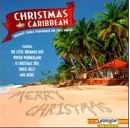
Besides Christmas in the Caribbean: Holiday Songs Performed on Steel Drums, we also have Mas! A Caribbean Christmas Party in heavy rotation. Track 2, Nwel La Rive (Noel arrive) by Lionel Benjamin, is an especial favorite around here.

Word of the day

From A.Word.A.Day, from the folks at Wordsmith:

schmendrik (SHMEN-drik) noun, also shmendrik, schmendrick, shmendrick

A foolish, clueless, and naive person.

[After the name of the title character in an operetta by Abraham Goldfaden
(1840-1908).]

December 07, 2005

The Stingy Scholar

A new discovery -- the Stingy Scholar blog, for "university-caliber educational materials on the cheap." The latest entry is all about grammar ("The Grammar Shack") and mentions Strunk and White. What's not to like? Stingy is now on permanent retainer at the blogroll at right...

Found about about Stingy because it's the official blog of Textbook Revolution, a collection of the existing free textbooks and educational tools available online. I'm not too keen on textbooks, but I do realize they have their place, especially for upper level math and science.

Consider this part of your virtual Christmas present from me to you.

December 05, 2005

Baby, It's Cold Outside

This morning at 8 a.m. it was still dark, still snowing, and only -22 Celsius, which translates to around -8 Fahrenheit. That's without any wind chill factor, by the way.

So this little item from last week's paper seems appropriate:

50°F - New Yorkers try to turn on the heat. Canadians plant gardens.

40°F - Californians shiver uncontrollably. Canadians sunbathe.

35°F - Italian cars won't start. Canadians drive with the windows down.

32°F - Distilled water freezes. Canadian water gets thicker.

20°F - Floridians wear coats, gloves & wool hats. Canadians throw on a t-shirt.

15°F - Californians begin to evacuate the state. Canadians go swimming.

0°F - New York landlords finally turn up the heat. Canadians have the last cook-out before it gets cold.

-10°F - People in Miami cease to exist. Canadians lick flag poles to see if their tongue will stick.

-20°F - Californians fly away to Mexico. Canadians throw on a light jacket.

-40°F - Hollywood disintegrates. Canadians rent some videos.

-60°F - Mt. St. Helens freezes. Canadian Girl Guides begin selling cookies door to door.

-80°F - Polar bears begin to evacuate Antarctica. Canadian Boy Scouts postpone "Winter Survival" classes until it gets cold enough.

-100°F - Santa Claus abandons the North Pole. Canadians pull down their ear flaps.

-173°F - Ethyl alcohol freezes. Canadians get frustrated when they can't thaw the keg.

-297°F - Microbial life survives on dairy products. Canadian cows complain of farmers with cold hands.

-460°F - ALL atomic motion stops. Canadians start saying "Cold 'nuff for ya?"

-500°F - Hell freezes over. The Toronto Maple Leafs win the Stanley Cup.

Here's to the Winter Solstice, only 16 days away -- onward and upward toward more light, more sun, more warmth.

December 03, 2005

Where do I get the t-shirt?


Or maybe I should just have it turned into a little sign to hang on the front door knob, for our afternoon readalouds in bed...

December 01, 2005

My father's latest addiction...

Laura is very lucky to have a very attentive Grandpapa. All she asked for was a videotape of the latest American Girl movie (which aired on Tuesday, about Colonial Girl Felicity and her Loyalist Friend Elizabeth), because she knows, especially after our NYC trip last year, not to ask anyone remotely related to her for a doll that costs around $100 US.

All of a sudden, Grandpapa asked Mommy what AG doll Laura might prefer to find under the Christmas tree. Well, of course she has a preference. She sleeps with the catalogue (and I'm still trying to find out how they found me on the prairie) under her pillow, and dreams of Elizabeth.

Then Grandpapa asked what size nightgown Laura might wear, so that she and the doll of her dreams might be similarly attired for evening. And then he discovered that the doll has a doll of its own.

Now he's talking about getting her a second doll, for her birthday. In August. The argument being that it would be twice as fun. That's what Grandpapa says.

I've had to train myself (and I'm still working on it) to let my parents spoil the kids with gifts. First, they aren't spoiled, and second, they get it from just one side of the family. My parents, who are still fortunate to enjoy good health and are still working, have a grand total of four grandchildren, while Tom's parents, who've been retired for a while, have 12. And we don't get to see, or spend as much time with, my parents as we would wish. Tom's parents live down the road. My parents live on the Upper West Side, and we're lucky if we get to see them once a year, though when we do we try to make it for an extended time.

The other thing that dawned on me just the other day is that I didn't have a grandfather when I was growing up. By the time I was born, only one grandparent, my mother's mother, who would come to live with us, was still alive. And I'm beginning to see how magical the bond between grandfather and granddaughter is. My fondest memory of our last visit is petite Laura sitting in a newly-bearded Grandpapa's lap, reciting her latest bit of poetry to him, and him beaming. I'm glad they're having so much fun together.

A Short History of Tractors in Ukrainian

What my father couldn't resist buying for his farmer son-in-law of Ukrainian extraction. Don't ask me where he heard of it lol.

I'm supposed to hide it when it arrives in the mail shortly.

November 30, 2005

Growing with Grammar: a review

A friend of mine, Tamy Davis, has just finished her new third grade grammar book, Growing with Grammar, the first in what will be a series. Homeschoolers, especially secular homeschoolers in search of a rigorous grammar program, will be delighted.

Since we were lucky enough to be part of the test group, we've been using the program now for about a month. I, and others who've already started using the program, have shared our thoughts on it here, in a testimonial at the GWG website, and here, in a review at The Denim Jumper.

The timing of the test group couldn't have been better. Laura had been working in Rod & Staff's Beginning Wisely grammar program since September. While grammar is one of her favorite subjects, she was beginning to balk at the the unending religious references, even when we changed names to brothers, aunts, favorite dolls, and book and movie characters. I had thought that we could work with R&S knowing that it was religious but not proselytizing. I had hoped that we could, because I really want something thorough for the kids.

Tamy saved our bacon. I had hoped secretly in my heart that GWG would be "as good as" R&S's highly touted (even by secular hs'ers) program. Guess what? It's better, yes, better. This, aside from the secular aspect -- which means it can be used by families of any faith or no faith -- is why:

-- it doesn't involve a lot of writing, which is especially nice for reluctant writers. But the exercises are incredibly thorough, and include a lot of review of previously covered material (and each exercise contains references to the original lesson in the manual, so you or your child can go back for more review if necessary). In fact, the 230-page workbook is just seven pages shorter than the manual. How's that for thorough? But it's fun, sort of like a Mad Libs book but educational and not disjointed or overly silly. The student exercises are a combination of rewriting sentences as well as underlining, checking or circling the right answer, and completing sentences with a few extra words.

-- both the manual and workbook are spiral-bound, so they lie flat on the table. Why should something so small make me so happy? Because books that flop shut of their own volition despite your best efforts do not make for extended, happy, learning periods. And the spiral-bound workbook is bound at the top, which makes it very nice if you have a lefty. I have a lefty and two righties, so this is much appreciated.

-- there's no teacher's guide, because one isn't needed. Just the manual, which you read through with your child, and the student workbooks. Very nice to get your budding grammarian doing more independent work.

I'll give Laura the last word: "I like that the activity pages [workbook] are fun, I can work on them by myself, and it's about kids like me and families like mine." And she's getting a solid foundation in third grade grammar. Sold!

November 28, 2005

Crash, bang, boom, or, Throw the bums out

Oh dear, is that the sound of a Liberal minority government falling that I hear?

I rather imagine that it would sound something like Fibber McGee's hall closet...

A Night at the Opera

We're off to the little city tonight to see Alberta Opera's production of Rapunzel. Tom is knocking off work early, because we have to leave here around 5 p.m. and the curtain is at 7.

Interestingly, when I called to order tickets, the woman who replied sounded rather reluctant to take my money, reminding me that the performance was on a Monday night, at 7 p.m. Alright, without my morning coffee I was a bit dense, but finally, after her tentative, "Well, it is a school night," my own curtain rose and light dawned. "That's okay," I told her. "We home school."

November 24, 2005

Thankful

Gratitude is not only the greatest of virtues, but the parent of all the others.
Cicero

I'm particularly thankful as a born American and naturalized Canadian that I have two official opportunities each year to be thankful, and so many unofficial opportunities and reasons.

Many of the things I'm thankful for this year are the same things for which I've been grateful for years, in no particular order:

my husband, who is kind, thoughtful (in all senses of the word), strong, a hard worker, a good earner, a great dancer, and blessed with masses of common sense and a terrific sense of humor, and so frugal that he enjoys leftovers; he is a dandy father who enjoys taking the kids along for the day, whether it's for building, farm chores, paying bills in town (at such fun spots as the farm supply store, automotive shop, and lumber yard), or hunting at dawn. And because he turns a blind eye to the boxes of books, and the bills for boxes of books, that arrive here regularly. And, as always, a special giving of thanks to my sister-in-law, who 12 years ago decided that her wedding had to take place in rural Alberta instead of downtown Toronto, and who kept insisting that her brother take me along to run pre-wedding errands.

my three kids -- healthy, joyful, and smart cookies all. They enjoy spending time with each other, with us, and discovering all there is to discover each new day. They have lively bodies and lively minds and are a joy to spend time with every day, something I'm mindful of when I encounter non-homeschooling parents who laugh too loudly when they say, "Oh, I couldn't spend all day with my kids."

our little house on the prairie under the huge prairie sky, warm, comfortable, and cozy, about to bulge out with a kitchen addition suitable for homeschooling (bookcases on the east wall!), dontcha know. And the four seasons, each so different, and some not as long as others (which can be a good thing and a bad thing). And speaking of pioneer life, I'm thankful for hot and cold running water, indoor plumbing, central heating, good roads, and supermarkets. And those butterfly bandages in the medicine cabinet.

a freezer full of our own beef, chickens, ducks, geese, venison, rhubarb, and saskatoons; and shelves of Mason jars filled with our own home-canned pears and peaches, cranberry sauce, and apple sauce.

the Zabars care packages from my parents, collected annually during our visits down south -- tubes of garlic paste, Zabar's freshly ground Mocha-Java, *real* pepperoni and unpasteurized Brie

our library and the magic of interlibrary loans, which brings books and audiobooks nearly to our door from across the province

the upcoming change to visit Grandmama and Grandpapa, loving grandparents and parents extraordinaire.

And a few new things this year:

Laura's discovery of the joy of reading (and her newfound artistic abilities),

Daniel's discovery of his ability to read

Davy's discovery of the joy of writing, which has brought him to discovering the necessity of the ability to read

hibernating bears

kittens that made it to adulthood without discovering fan belts in trucks or coyotes in the back yard (aka Back 40)

our close friends, who are now 15 minutes away instead of two-and-a-half hours

Amazon.ca, which has seen the errors of its customer-unfriendly ways and has started shipping orders qualifying for "free shipping" in a timely manner rather than holding them hostage

and last but not least, all of my new invisible imaginary online friends, most of them other home schooling mothers, and all of them smart and smart alecky, strong, funny, and kind, who have opened doors, windows, and hearts for me. I thank you.

Happy Birthday, my tan-faced prairie boy

Now we are five, and I love you even more now than when I first held you in my arms, even if you did wake me up at 5:30 this morning to open your presents. But you know, the presents really are all mine.

O Tan-Faced Prairie Boy
by Walt Whitman

O tan-faced prairie-boy,
Before you came to camp came many a welcome gift,
Praises and presents came and nourishing food, till at last among the recruits
You came, taciturn, with nothing to give -- we but look'd on each other,
When lo! more than all the gifts of the world you gave me.

November 23, 2005

The not so Amazing Race

Not a particularly meaningful entry for my 100th post (tee hee), but I'm having difficulty getting interested in the current edition of the Amazing Race. Especially since the Gaghan family with the two little kids was eliminated. After last night, all I have to say is, what she said. And I'm glad I'm not taping episodes for my kids anymore. Sigh.

November 22, 2005

Something immeasurable and almost indescribable

From The New Yorker, November 30, 1963, by E.B. White:
When we think of him, he is without a hat, standing in the wind and weather. He was impatient of topcoats and hats, preferring to be exposed, and he was young enough and tough enough to confront and to enjoy the cold and the wind of these times, whether the winds of nature or the winds of political circumstance and national danger. He died of exposure, but in a way that he would have settled for -- in the line of duty, and with his friends and enemies all around, supporting him and shooting at him. It can be said of him, as of few men in a like position, that he did not fear the weather and did not trim his sails, but instead challenged the wind itself, to improve its direction and to cause it to blow more softly and more kindly over the world and its people."
From a letter to Robert Kennedy from E.B. White, recipient of the Presidential Measure of Freedom, December 1963: "The accomplishments of presidents in office are usually measured in rather exact terms, but your brother gave the country something immeasurable and almost indescribable, for which we all will be forever grateful."

From Death of a President by William Manchester:
In his notes to himself [an unnamed Cabinet member] observed that Lyndon "does not have this sense of the time and the age and the forces which John F. Kennedy had to such an unusual degree." The cachet was gone. It had been odd: "Jack Kennedy was never really outgoing in a sense with people that you felt close to him, but yet he had that peculiar quality that so endeared him and commanded such loyalty and devotion...that quality was there until I could almost say that you love that man [despite] his somewhat taciturn New England attitudes."
Excerpts from John F. Kennedy's acceptance speech at the Democratic Convention, Los Angeles, July 15, 1960:
... We are not here to curse the darkness, but to light the candle that can guide us through that darkness to a safe and sane future. As Winston Churchill said on taking office some twenty years ago: "If we open a quarrel between the present and the past, we shall be in danger of losing the future."

Today our concerns must be with that future. For the world is changing. The old era is ending. The old ways will not do.

All over the world, particularly in the newer nations, young men are coming to power -- men who are not bound by the traditions of the past -- men who are not blinded by the old fears and rivalries -- young men who can cast off the old slogans and delusions and suspicions. ...

For I stand tonight facing west on what was once the last frontier. From the lands that stretch 3,000 miles behind me, the pioneers of old gave up their safety, their comfort and sometimes their lives to build a new world here in the West.

They were not the captives of their own doubts, the prisoners of their own price tags. Their motto was not "every man for himself" -- but "all for the common cause." They were determined to make that new world strong and free, to overcome its hazards and its hardships, to conquer the enemies that threatened from without and within.

Today some would say that those struggles are all over -- that all the horizons have been explored -- that all the battles have been won -- that there is no longer an American frontier.

But I trust that no one in this assemblage will agree with those sentiments. For the problems are not all solved and the battles are not all won -- and we stand today on the edge of a new frontier ... a frontier of unknown opportunities and perils -- a frontier of unfulfilled hopes and threats. ...

... I tell you the New Frontier is here, whether we seek it or not. Beyond that frontier are uncharted ares of science and space, unsolved problems of peace and war, unconquered pockets of ignorance and prejudice, unanswered questions of poverty and surplus. ...

For courage -- not complacency -- is our need today -- leadership -- not salesmanship. And the only valid test of leadership is the ability to lead, and lead vigorously. ...

Can a nation organized and governed such as ours endure? That is the real question. Have we the nerve and the will? Can we carry through in an age where we will witness not only new breakthroughs in weapons of destruction -- but also a race for mastery of the sky and the rain, the ocean and the tides, the far side of space and the inside of men's minds?

Are we up to the task? Are we equal to the challenge? ...

November 20, 2005

All the lost boys and girls

Laurie Gough's article in yesterday's National Post is one of the saddest and dispiriting I've ever read. Gough, an author who pays the bills by teaching, writes,
In recent days, the Canadian media has focused its collective gaze on Kashechewan, the tiny native community on the shores of James Bay in Ontario. Much has been made of the town's contaminated water, which has sickened hundreds of residents and forced many to be evacuated. But having lived and worked in Kashechewan, I can report that water problems are just the tip of the iceberg. In almost every respect, Kashechewan is a very sick place.

Kasechewan is a recent Canadian scandal, about drinking water supplies on the Cree reserve, in northern Ontario, contaminated with E. coli. Many of the reserve's residents were evacuated to cities in southern Ontario, and the provincial and federal governments have promised millions in aid, to fix the water supply, houses, and schools. Gough's article, about her brief time teaching in a Kasechewan school, makes me wonder if those millions will make any difference in such a sick place that may not be able to be healed. What we need to do is to turn the clock back, well before the misbegotten idea of reserves was put forth. I've quoted much of Gough's searing article, making for a long post, but you'll get no apologies from me. And you should really click on the link above to read the article in its entirety, including Gough's worst example of student behavior.
My experience in Kashechewan generated a complete unravelling of almost everything I believed. Until then, I romanticized Third World and native cultures. Unfairly, I put those people on a pedestal, somehow expecting them to be wiser than people from my own culture, more connected to the land, perhaps even possessing an ancient knowledge that our culture had lost eons ago. ...

Let me relate some highlights of that first morning: Dead animals were thrown around the classroom -- mice, sparrows, small rats. At one point, something I thought was the tail of a mink torpedoed toward me. When the rusty-coloured object landed on my desk, I looked down in horror at the braid of my hair. I reached up to feel my newly cropped hairstyle. Somehow, during the chaos, one of the kids had put his or her scissors to use. The curtains were torn down and used as a giant hammock. Books were cut up, scribbled upon and chewed. Nothing I did to try to prevent any of this had any effect. I was a non-entity. Already I'd aged five years and lost my voice. My hands were shaking. It was 10 a.m. I'd "get used to it," the other teachers told me.

The other teachers were wrong. I never got used to it. It never got better. But at least I had the advantage of knowing that if I really wanted to I could escape that sad little ice village and join my own culture again. These children and their parents were caught in a no-man's land, lost between two worlds -- one foreign, the other going extinct.

As time went by, I realized that very little native culture remains today in sub-Arctic Canada. Once, small bands of nomadic Cree roamed the territory, hunting, fishing and gathering. Today, most live in villages year-round in pre-fab houses, unemployed, on welfare and getting their highly processed food at the Hudson's Bay store. The vast quantities of sugar consumed daily by the kids is evident in their rotting teeth. Here and there, some of the old ways still exist: Twice a year, school is shut down for a week-long goose hunt. (The children were excellent goose callers, as they demonstrated daily in class.) But otherwise, it's simply a squalid imitation of the white man's world.

I was astounded by the discipline problems in the school -- until I observed the cause: These children's lives weren't structured in the way of most children's lives in the south. Children are rarely told what to do or not to do. They may sleep at a different house every night. Meals are rarely eaten together as a family. When I would ask the kids what they had for lunch, Mars bars, Coke and potato chips were the usual replies.

Television, it seemed to me, was the main culprit in destroying what little the people had left of their culture. Within a year of the first TV's arrival in the village in the late 1980s, the nurses told me, children began to fight regularly and swear at the teachers -- behaviour that had previously been rare. No longer were they content with their homemade toys; they wanted plastic guns instead.

In the times when the Cree embraced a traditional hunter-gatherer lifestyle, their ancestors' parenting methods would have worked. Allowing children to roam freely without rules helps them develop useful survival skills. But now that the people no longer hunt and gather to survive, this child-rearing method no longer works. Children typically become depressed and hostile by their early teens. The anger lasts into adulthood, where it's often accompanied by hatred toward all outsiders. Teachers would sometimes be pelted with rocks and snowballs as we walked down the road. Across the river, someone had hung the female principal's dog by a noose so it dangled dead on her front porch when she stepped out to work one morning.

Most parents were not the least bit interested in encouraging education or reading to their children. One reason, I had to remind myself, was that up until the 1960s, generations of parents had been taken away to residential schools at early ages. No wonder many of these adults had few parenting skills: They'd never had the chance to learn such skills from their own parents.

It was also evident that the very few who did manage to get away from the reserve to complete their educations rarely returned. This was understandable -- but it meant the community had few educated, positive role models. ...

After three months, I began waking up with headaches and dark circles under my eyes. One day in class, I think it was the day when the kids had stolen my house keys -- they regularly stole things, but I really needed those keys -- I felt so defeated and exhausted that something in me simply gave up. I sat at my desk and watched bleary-eyed as they whirled around the room like dervishes, destroyed every remaining book and sprayed glue into each other's faces. I couldn't fight it anymore. In one last-ditch effort, I invited the parents into my class to help me, but none of them showed up. ...

I had gone to Kashechewan naively looking for a culture that no longer exists. Instead, I found abuse everywhere -- of children, women, animals and even the land itself, supposedly the subject of so much cultural veneration. On the reserve, open sewage was emptied into the streams; garbage was thrown all over the place; and every year, on Dead Dog Day, stray dogs were shot and thrown into the river, turning the water an alarming, brilliant red.

I have no idea what the answers are. But I do know I came away with the feeling that somewhere along the line, a great injustice had been done to those kids. In time, they will turn into equally dysfunctional adults, never having had the chance to succeed and thrive in a healthy community.
How on earth do you help? What on earth do you, can you, do?

November 18, 2005

The 100 most important Canadian books

as determined by The Literary Review of Canada. Not the 100 greatest, or the best, but the most important, arranged in chronological order. Everything from Jacques Cartier to Anne of Green Gables to Peggy Atwood.

Get cracking!

November 17, 2005

Just ordered from interlibrary loan


The one on the right, in case you can't read it, is Mangoes and Curry Leaves: Culinary Travels through the Great Subcontinent, by the husband-and-wife chef team of Jeffery Alford and Naomi Duguid.

I am definitely doing the library happy dance in the kitchen, even though I am number eight for Talk to the Hand. Utter bloody rudeness, indeed.

What to give the man who has everything

Okay, Tom doesn't have everything, but he's a pretty content guy who seems to have everything he needs and wants, which makes finding Christmas and birthday presents for him an annual difficulty for me. He doesn't collect anything other than tools, about which I still know next to nothing (I bought him a lovely English chisel set from Lee Valley for our first Christmas together, only to find that he already had three similar sets), and isn't interested in much that's technological, so that rules out a whole host of giftable "toys." (Which, of course and thank goodness, is what gives me the freedom to blog about it lol.)

I tend to think that a book is always the perfect gift (especially because it's the one I most like to receive). But though Tom loves books and loves to read, between long days of building and farming he just doesn't have the time to read as much and as often as he'd like.

Well, I just figured out how to give him time.

Last month he finally bought a new, okay, newer, truck to replace his collapsing 1978 Ford pickup. It has a moonroof, controls to move the pedals, heated leather seats, and all sorts of other luxurious and handy dandy features, including -- ta da -- a six-cd changer. One of the first days driving the new truck, he happened to hear part of a CBC rebroadcast of Ronald Wright's A Short History of Progress. Unable to hear all of it, he asked if I could get the whole set from the library. I did, and we were able to listen to the entire thing, with very patient kids in the back seat, on our six-hour odyssey to pick up the laying hens.

So it occurred to me the other day that for Christmas I could get Tom a cd holder, maybe binder style, and fill it with audio books he would enjoy and could listen to while driving. I'm thinking of Krakatoa by Simon Winchester, Collapse by Jared Diamond, A Short History of Myth by Karen Armstrong (which I hope to blog about when I get the hardcover from interlibrary loan), and (the unfortunately abridged) Sailing the Wine-Dark Sea by Thomas Cahill, which I would love to be able to discuss with Tom. That should get him through the first part of 2006.

If and when I figure out how to give myself the gift of time, you'll be the first to know lol.

November 16, 2005

Reading aloud

Patricia Storms, who has a way with words and pictures (her own and others), at her blog BookLust asks the questions,

"Do you remember being read to as a child? and Would you like to be read to now, as an adult?"

Good questions, and ones that have particular resonance for me as a home schooling mother with a passion for books and reading, especially because I want to pass that passion along to my children. Interestingly, not many of the commenters at BookLust remember being read aloud to. I don't either, though I know my parents did. I'm also pretty sure that they were more than ready enough to hand over the job to their newly independent reader.

As home schoolers, readalouds play a large part in our days, and in our lives. Some of our more enjoyable readalouds this year have included Caddie Woodlawn, Fantastic Mr. Fox, Charlie and the Chocolate Factory, and the rereading, for the umpteenth time, of the collected works of Robert McCloskey. I read aloud to the kids in the afternoon (usually for history and science), and then before bed. When they were younger, I'd read to them before naptime; as a toddler, Laura came to associate the collected tales of Beatrix Potter with naps and would ask for the "sleepy bunny" stories. I often read bits and pieces aloud to Tom (especially when he's driving and especially when he's tired), he reads interesting finds aloud to me, and we all enjoy listening to audio books together, particularly the treasures from Naxos. Until recently, Laura would read aloud to me (now, she explains, "reading aloud doesn't let me read fast enough"), and some of my most pleasant memories from the past few years include cooking or doing laundry with my little blonde daughter perched on a countertop nearby, book in hand, lisping her way through Harper & Row's various I Can Read series and, later, the Magic Tree House books.

I've even admitted to a few friends our variation on "car schooling" -- in our case, "bed schooling," because most of our readalouds, whether for history, science, or just for fun, take place in the master bedroom on the bed, where there are enough pillows and room for everyone, either to snuggle up or to stretch out with coloring pages. Had I known then what I know now, I might have asked my husband to spring for a king size bed, or, what one family I know has, an enormous mattress right on the floor, perfect for sprawling with books, magazines, cats, and just about anything else you can think of.

I'm very much looking forward to many of the readalouds I've planned this year to go along with our history and literature studies this year, pegged to Story of the World, Volume 3: Early Modern Times: Treasure Island, Robinson Crusoe, the Nonsense Rhymes of Edward Lear, Alice in Wonderland, Oliver Twist, A Christmas Carol, Gulliver's Travels, and more. I'm in a bit of a rush, so I'll try to add links to the specific editions we have later on.

So what about you? Do you remember being read to as a child? Do you like being read to? Do you read aloud much with your kids now?

Semper ubi LONG sub ubi

Hey, we are classical homeschoolers, and this is Alberta in November, so I have to admit that it was one of the first thoughts to pop into my head when the temperatures dipped down below zero (in Celsius at least). Way down, to -19C last night. Brrr. Right now, it's warmed up to an almost balmy -2C, and the sky is overcast, which can mean only one thing: snow.

As I sit here in my long johns with a nice warm cup of coffee, and Laura sits nearby on the register reading, I think back to ninth grade, where thanks to my father's insistence I was one of only two high school students and the only girl in a Latin class filled with fifth-grade boys. One of the first things my new classmates taught me was "semper ubi sub ubi", which literally translated means "always where under where." Which of course cracks up the average boy, whether he's in fifth grade or ninth. The very English Mr. Smith, very old school, was our firm, demanding, but exceedingly kind teacher, and in retrospect I suspect he must have been a bit relieved at having an older student, especially one who didn't snicker at the mention of Lesbos and was rather moved by some of Catullus. I loved Latin, and dear, dear, old Mr. Smith, so much that I took Latin for all four years and in 10th grade added ancient Greek. Both stood me well in high school, and into college, and I can still remember more than just the underwear business. And I still treasure the pottery mug, with my name and the year, Mr. Smith commissioned from the school's art teacher as my graduation present; now cracked, it sits on my desk and holds pens and pencils.

Hey, I suppose I could teach the kids some of my "winter" Latin. And won't Dad be surprised?!

Why we love going to dentist

We camped out at the dentist's office yesterday for nearly three hours so all three kids could have their check-ups (and Laura ended up with sealant on her molars; she was delighted to hear that she, like her beloved horse, has deep grooves). Not as bad as it sounds because

1. thanks to checkups every six months since they were tots (and before that, they'd sit quietly on me or nearby while I had my checkups), they lie there like champs, with their mouths wide open. Even when they don't have to.

2. thanks to the check-ups every six months, no cavities again. Well, there was that one horrible time when the youngest was too young for teeth and the eldest was old enough to more or less (apparently more) take care of her own and somehow middle child's mouth got neglected by Mommy -- not a good tendency with his tendency away from vegetables and other healthy snacks and toward anything sweet -- who was just so tired from looking after various children's ends and other odds and ends, and somehow middle child ended up with six, count 'em, six, cavities. All at one time. In that teeny tiny mouth. Oh. my. god. I think it was more traumatic for me than for Daniel. I am able to think about it now but am still secretly waiting and hoping for all those cavitied baby teeth to fall out. Soon, damn it.

3. I didn't have to pay this time. Whoopee! I didn't even mind that I had started writing out the check (which I can use next week when I go for my own check-up). Because this is Canada, land of national health care (see item no. 6), and because we go to the dentist twice a year, one child's visit annually is covered under the provincial health care system. (Of course, we could be like the other people in town and go once a year at most. At twice a year, a schedule started by my mother who grew up in war-torn Yugoslavia and ended up with dentures in her twenties, we are the village oddities.) I couldn't remember that the kids' visits in the spring had been on our dime, so it was a pleasant surprise to have the receptionist tell me no need to pay. Especially because this was a visit with x-rays and sealant. And I'm not going to mention the braces that I can see marching toward at least two of the kids. Did I mention we farm and have no private insurance that covers such niceties?

4. We left with a bagful of loot -- one prize each from the prize room (Laura got a braided, beaded bracelet; the boys, little plastic parachutists who've been making appearances down the stairs and into the basement), new toothbrushes and garishly colored and flavored floss, a pack of gum each (the dentist must be part of some Gum-ola scheme, because besides the gum I got a spiel about how this one brand of gum is actually good for our teeth. Yeah, right, more like good for the dentist's business) which I intend to save for a plane trip after the holidays. And something new for those with no cavities -- three coupons for a free movie rental. Double wowee.

5. Laura, a natural worrier like her mother, had her fears about the various bumps and gaps in her mouth allayed first by the hygienist and then by the dentist. The bumps are the belated arrival of her six-year molars (and yet not-quite-five-year-old Davy's x-rays showed that his six-year molars have just started breaking through the bone now). I tried to explain, but of course a mother isn't nearly as reliable as a trained professional.

6. Best of all and completely non-tooth related, the hygienist assumed that we're the same age. To which I will only say a) Ha! and b) I am delighted that at 41 and after nearly three hours in a dentist's office I can apparently pass for 35. I am so delighted, in fact, that I plan to overlook the fact that the wonderful, younger hygienist from Saskatchewan admitted that she had never heard of famous Saskatchewanian Tommy Douglas (father of national healthcare -- called Medicare, by the way, and not be confused with the other Medicare in the U.S. -- in Canada, not to mention Kiefer Sutherland's grandfather, ex-father-in-law of the newest Mr. Bennet, and winner of CBC's Greatest Canadian contest the other year). "I'm not that into politics," she explained.

Oh.

Well, thanks for everything, and see you in another six months!

November 11, 2005

Confessions of an idiotic Luddite

I don't know whether I should blame my recent computer woes on being an idiot or a Luddite, so maybe I should claim both. The good news is there was no "hard drive" or "hard disc" failure as my father had feared. Instead, I was out of self-imposed commission because in the heat of editing and rewriting an article on homeschooling for a friend much too late at night, one of my fingers apparently grazed the F7 key, which on my PowerBook is the "spanning" key, used by those of us with external monitors (unlike the graphic designers and gaming types whose advanced computer skills require these monitors, I got my monitor last spring when the screen on my laptop gave out and I refused to pay the $800 to replace it).

Reminds me of all those chimps sitting at typewriters in the hopes of cranking out a Shakespearean sentence, except in reverse.

Yoohoo...

Over on the right side -- under "What We're Reading, Watching & Listening To" -- are some new listings. Instead of using all that extra time in the last month and half gained from not having a computer to, say, become an obsessive house cleaner, I decided to use it to add some more books and movies to our days. Wouldn't want Tom to get the wrong idea about life without a computer, eh?

As Squeeze would say, "I've Returned"...

Tom, the kids, and I went to Edmonton yesterday, mainly to get Davy's passport sorted out (three tries at the photos, and one application mailed off but returned by functionaries), which we did and successfully to boot. Very nice since we're supposed to be in another country in about two months. As a bonus, we stopped off at the Apple repair place and picked up my languishing laptop which is now in apple-pie order (and just in time to start ordering books from Amazon etc. for far-flung family for the holidays). So I'm now back in business, blogging and otherwise. Hooray.

Extra bonus -- after the computer store, we went to the former Provincial Museum, now renamed (by Good Queen Bess II when she was here in the summer for the centennial celebrations) the Royal Alberta Museum. Not too big, but lots of fun things to see, including the requisite taxidermied specimens, an exhibit called "Kid Stuff" with toys from the 50's and 6o's that all of a sudden made my pulse race (did I ever think I'd see the brightly colored boxes from Colorforms or Magic Rocks again?), dinosaurs (featuring, of course, Albertasaurus), Canadian gems and minerals, and a nifty exhibit on Native life, the Gallery of Aboriginal Culture. But the highlight was a chance to chat with the bug wrangler in the Bug Room, as we went around feeding and misting his very live charges. The kids were quite taken by the Madagascan Hissing Cockroaches, because we've learned recently that my parents will be spending the holidays with my sister and her family in Kenya, where they live; Christmas will find them on Madagascar, and while Santa may not find them, the hissing cockroaches just might. Or as Laura put it, "Grandmama will be lucky because she'll be able to hear them before she sees them." I'll have to double-check and see if my mother really considers that a benefit lol.

Glad to be back.

P.S. I see that the fine folks at www.welltrainedmind.com were kind enough to add Farm School to their list of blogs. A big thank you to them, and a welcome to everyone who has stopped by -- with apologies to those who've found till now only sporadic postings.

Remembrance Day II

From Testament of Youth by Vera Brittain:
When the sound of victorious guns burst over London at 11 a.m. on November 11th, 1918, the men and women who looked incredulously into each other's faces did not cry jubilantly: "We've won the War!" They only said: "The War is over."...

Late that evening, when supper was over, a group of V.A.D.s [Volunteer Aid Detachment nurses] who were anxious to walk through Westminster and Whitehall to Buckingham Palace prevailed upon me to join them.... After the long, long blackness, it seemed like a fairy-tale to see the street lamps shining through the chill November gloom.

I detached myself from the others and walked slowly up Whitehall, with my heart sinking in a sudden cold dismay. Already this was a different world from the one that I had known during four life-long years, a world in which people would be light-hearted and forgetful, in which themselves and their careers and their amusements would blot out political ideals and great national issues. And in that brightly lit, alien world I should have no part. All those with whom I had really been intimate were gone; not one remained to share with me the heights and depths of my memories. As the years went by and youth departed and remembrance grew dim, a deeper and ever deeper darkness would cover the young men who were once my contemporaries.

For the first time I realised, with all that full realisation meant, how completely everything had hitherto made up my life had vanished with Edward and Roland, with Victor and Geoffrey. The War was over; a new age was beginning; but the dead were dead and would never return.

Edward was her brother, Roland Leighton her fiance, and Victor Richardson and Geoffrey Thurlow friends of brother and sister. In her will after death in 1970, Miss Brittain directed that her ashes be scattered on her brother's grave on the the Asiago Plateau because "for nearly 50 years much of my heart has been in that Italian village cemetery."

Remembrance Day

Anthem for Doomed Youth
by Wilfred Owen (1893-1918)

What passing-bells for these who die as cattle?
Only the monstrous anger of the guns.
Only the stuttering rifles' rapid rattle
Can patter out their hasty orisons.
No mockeries now for them; no prayers nor bells,
Nor any voice of mourning save the choirs, --
The shrill, demented choirs of wailing shells;
And bugles calling for them from sad shires.

What candles may be held to speed them all?
Not in the hands of boys, but in their eyes
Shall shine the holy glimmers of good-byes.
The pallor of girls' brows shall be their pall;
Their flowers the tenderness of patient minds,
And each slow dusk a drawing-down of blinds.

November 04, 2005

Thoughts on returning home from the weekend's organic farming seminar in Regina, Saskatchewan

"Pasture Management"
by E.B. White

Down here below the pasture pond,
O'er the lovely lea,
I went spraying the bushes
With 2, 4-D.

(For young, susceptible annual weeds, apply one to two pints per acre.)

I had read my bulletins,
I was in the know.
The two young heifers
Came and watched the show.

(Along ditches and fences rows, use 2,4-D when weeds are in a succulent stage. Won't harm livestock.)

Rank grew the pasture weeds,
The thistle and the bay;
A quiet, still morning,
A good time to spray.

(Control weeds the easy way with Agricultural Weed-No-More--not by chemical burn but by hormone action.)

Suddenly I looked and saw
What my spray had found:
The wild, shy strawberry
Was everywhere around.

(An alkyl ester of 2, 4-D is produced by reacting an alcohol with the raw 2, 4-D acid. The result is an oily liquid that sticks to weed leaves.)

What sort of madness,
Little man, is this?
What sort of answer to
The wild berry's kiss?

(Any 3- or 4-gallon garden pump-up sprayer can be used, after the standard nozzle has been replaced with a new precision nozzle.)

It seemed to me incredible
That I'd begun the day
By rendering inedible
A meal that came my way.
All across the pasture in
The strip I'd completed
Lay wild, ripe berries
With hormones treated.

(The booklet gives you the complete story.)

I stared at the heifers,
An idiot child;
I stared at the berries
That I had defiled.
I stared at the lambkill,
The juniper and bay.
I walked home slowly
And put my pump away.
Weed-No-More, my lady,
O weed no more today.

(Available in quarts, 1-gallon and 5-gallon cans, and 55-gallon drums.)

November 01, 2005

Reviving "Reviving Ophelia"

I picked up a paperback copy of Reviving Ophelia the other week for a quarter at the library book sale. As the mother of a daughter (pre- preteen), all I can say is this is an appropriate time of year for scary and horrifying reading material. I don't have the book with me at the moment, but all I can say is that the book was written over 10 years ago and in that time the cultural situation to which Mary Pipher refers has only deteriorated. I don't know that I'm learning anything new but rather having some fears and concerns and other assorted thoughts confirmed. The prime one would be that control is not a bad thing, if exercised wisely. Hold your children close...

On a similar note, we've been spending lots of times with our friends, the H. family, who moved back here recently. They have a daughter Laura's age and a son Daniel's age, and all five get along like a house afire. Mr. H is Tom's best friend since first grade, and they were married a few months before we were. The H's had hs'ed earlier this year, from January to June, but after moving here decided to put the kids in the local public school a) to make some friends and b) because they have lots of extended family here, and some of the sisters in law aren't exactly open to hs'ing. But after a couple of months now, the kids are getting bored, especially their son in first grade; while he's been reading for several years now, his classmates are only just learning the sounds of the letters. Mrs. H has asked to borrow some of our hs'ing books -- especially the "What Your xx Grader Needs to Know" series by E.D. Hirsch, Jr. and Rebecca Rupp's similar one-volume effort -- and I've been more than happy to oblige. Our family is silently urging them on, especially because it would be much easier to get the kids together without dealing with the public school schedule.

Next Tuesday after piano lessons we have our facilitator meeting. In Alberta, we're required to register with a hs'ing board, and we're assigned a facilitator (you can change boards as often as you want, and also request a different facilitator from your board if you don't think s/he is a good fit with your family), who comes to visit twice a year to check our progress. Our board and facilitator are very low key and very trusting in Tom's and my ability to know what's best for our kids, thank goodness. In part, it's because -- surprise -- the board is not secular. It's nominally Catholic, and many of the facilitators and families are evangelical Christians. But they are all homeschoolers first, and Alberta Education Department bureaucrats last; in fact, they are all more than willing to take on the oodles of paperwork on behalf of the families registered with them.

The kids are eagerly awaiting Mr. M's visit next week. Laura is planning to move her ever-growing Post-It Note bookworm -- each note has the title of a book she's read since becoming a bookworm herself -- to the kitchen so he can see it, and working on her "diary" (which replaces her formal grammar and spelling lessons twice a week now -- her idea, and she's having great fun with it). Daniel wants to show Mr. M how he can read now, and carefully writing out a list of camping supplies to demonstrate his penmanship. Davy, who as a kindergartener technically isn't registered yet, doesn't want to be left out so he's readying his binder for "facilitator show and tell." Mr. M won't know what hit him after Hurricane Farm School bowls him over with enthusiasm lol.

October 26, 2005

Trick or treat

Trick: still no progress on the computer front. Though I did learn that Apple gives homeschoolers discounts (on iPods too): www.apple.com/education/k12/homeschool.

Treat: Tom and I are off to Regina, Saskatchewan (seven hours away...) this weekend for an organic farming symposium. I'm a bit put off by the thought of the three-hour soil fertility seminar on Saturday morning, but it will be wonderful to have almost three whole days together, especially after the fun that is a nearly three-month harvest... And of course there's the proximity to stores -- book stores, music stores, clothing stores. And the museum, where I think I might be able to find some fun treats for the kids in the shop.

Treat: Tom finally realized that he had to buy a new truck, and his 1978 pickup, in dire need of new tires and a new transmission, has been pensioned off. The replacement is a new-to-us 2003 Ford F-150, shiny black, the Lariat with leather seats (the front two of which can be heated if you press a switch), a six-CD changer, sun roof, and more. Tom offered me the new one, but my huge honking F-350 is more of a tank and so safer with the kids. What can I say, I'm practical to a fault.

Treat: Speaking of being practical, last year for our 10th anniversary I asked for an addition to the kitchen instead of, oh, a diamond ring or expensive trip. Tom started the foundation this week, hurray! It won't be finished any time soon, because it will be worked on in fits and starts in between the paying clients, but it's underway : )

Treat: Saw over at Schola that L. and her family are safe in the wake of Wilma. Relief.

Trick: Davy's passport application was returned, sigh. The pictures taken in town didn't make the cut, so we'll have to drive nearly an hour to the east to the nearest Wal-Mart, re-do the application and have our guarantor sign everything including photos again, and then go to Edmonton, two hours to the west, to take everything to the Alberta passport office, much faster than mailing it. Because the kid has to have a passport by January or he's not coming with us to the West Indies to see my parents. The good news is that this predicament will force a trip to Edmonton, where my laptop is in the hospital.

Trick: The kids keep changing their minds about Halloween costumes. At last count, I have a clown, a soldier, and a Ukrainian dancer. But apparently that's all subject to change, and often.

Must run. Laura's Brownies Halloween party is done, and it's time to head home. See you after Regina.

October 18, 2005

No news...

isn't necessarily good news on the computer front. Haven't heard from the Apple repair guys about the dead laptop yet and just may have to phone them in the next day or two (yes, the withdrawal pangs are awful, though I was distracted from them on Sunday by my bout of the 24-hour stomach virus, passed along by the kids in domino fashion).

We've been in town all day today, first the library book sale, then a homeschool field trip to the college farm where I got to cuddle a five-day-old piglet (shades of Wilbur), then piano lessons, and now while I have my free hour of computer time at the library, the kids are at the monthly homeschool gym day, playing dodgeball to a salsa soundtrack.

Tom's truck is ailing again, and I'm hoping he buys a new one by the end of today so we can stop this sharing business. Though I should be kinder -- last night he told me that my long-awaited kitchen addition project might start in a few weeks. Woohoo! I'm imagining a large box added on to the existing bowling alley, with built in bookcases on the east wall (with cabinets on the bottom) and a big chalkboard on the west wall, and a north wall full of windows.

Must run before the kids turn into pumpkins across town...

October 11, 2005

How to bring Thanksgiving dinner with a bunch of public school teachers to a screeching halt with Pyramus and Frisbee

At dinner on Sunday, Tom's brother asked our youngest (not quite 5) if he knew any good stories. So excited he almost fell off his chair, Davy announced loudly, "Yes! Pyramus and Frisbee and the wall. And Puck is very funny, too." He then proceeded to tell everyone the story of "A Midsummer Night's Dream" -- new to more than a few of our relatives, including the three public school teachers present -- which the kids have been enjoying on DVD thanks to Shakespeare4Kidz, an English outfit.

Then, just as I felt able to lift my head up from my plate and glance around, Laura said thoughtfully, chewing some pie, "I think the myth of Pyramus and Thisbe is where Shakespeare got the idea for Romeo & Juliet. Don't you think so, Uncle Steve?"

And then Tom kicked me under the table and started laughing.

October 06, 2005

Denim Jumper

Thanks to Poppins, we now have Denim Jumper, www.thedenimjumper.com . Thanks, Poppins!

Click

The most amazing thing happened last week, on Tuesday at the library while I was checking my email (and mourning my poor computer, which as of today has finally made it to the Apple doctor, though I don't think the news will be good, or cheap). I had told the kids I needed them to behave and be good (and quiet) at the library for an hour while we were there, and Laura rolled her eyes and pouted and snarked, "WHAT am I going to do at the library for a whole hour?" (this is my daughter? The result of our family's "literacy rich environment", as the public school experts would put it?). She was even contemplating staying in the truck and listening to an audio cd for the entire time. But I told her that wasn't an option.

Well, we turned up at the library after piano and found some home schooling friends with an almost 9 year-old-daughter. For some reason, Laura grabbed a new Magic Tree House book off the shelf, and she and the other sat together in one chair and after about 50 minutes Laura raced up to me at the computer and delightedly told me that she had read the whole book.

Bingo. Ever since, my formerly reluctant reader has been an avid bookworm and has been gulping down at least a book a day. This, after I considered everything from eye doctors, bribing her with money and treats (which didn't appeal to either of us, though for different reasons), plying her with books on all of her favorite subjects and interests (horses, princesses, history, etc.). She'd read when she had to, but not on her own time. Now I have to pull her out of bed in the morning, where she's hunkered down with her bedside lamp and another book. She's rereading -- her own idea -- a lot of things she read before when she wasn't particularly interested in the reading process, which is a rather interesting development.

I'm dizzy and delighted at the change, especially so soon after the unsuccessful visit to the optometrist. I don't know what happened -- if there was any physical change (the letters not looking so small) or if she just needed the confidence to see that she could read a book on her own (and then realize that it was fun). Laura is busy making piles of books in her room -- what to tackle when the Magic Tree House stream dries up -- and lists of possibilities for me to order for her via interlibrary loan. And books she wants for Christmas. And supplementary SOTW3 books she wants to read on her on. The only thing I'm not too crazy about is her self-imposed absences from our family absences so she can read on her own. But I can't really complain about that too much, can I?

Another thing to be thankful for this coming weekend. Happy Thanksgiving, eh?